Ghosts in the IM: Conversations Between Writers (and Editors)

First of all– I am not dead. I got a cold which tried to take me out like a ninja rhinoceros and had me in bed for a full week. I’m now on prescription cough syrup so I’m going to go quickly to the Conversation here.

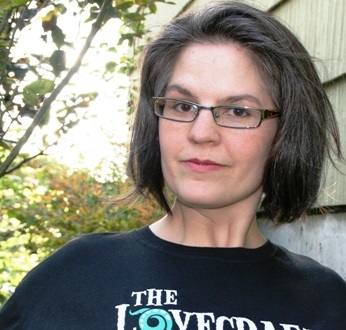
Brian White and Wendy Wagner

 

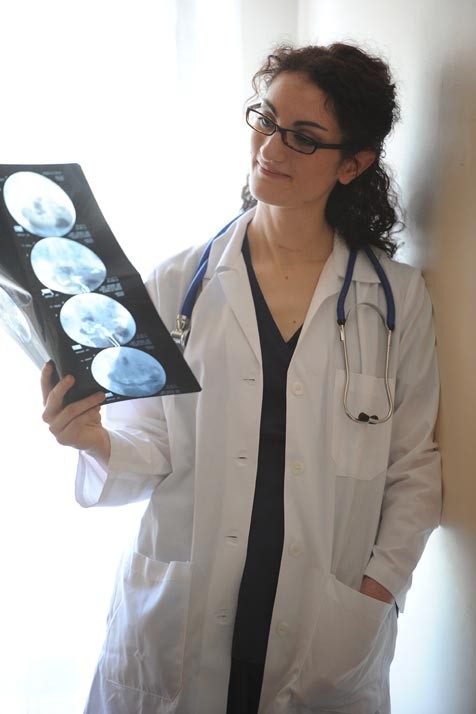
picWendy N Wagner


Brian White is the editor of Fireside Fiction Magazine and terrorizes Twitter as @talkwordy and blogs at http://www.talkwordy.com/.

Wendy Wagner is the Managing/Associate Editor of both Lightspeed Magazine and Nightmare Magazine, a regular blogger on the Inkpunks publishing blog and her recent Pathfinder novel is Skinwalkers and she can be found on Twitter as @wnwagner

Brian J. White:  /waves/

 Wendy N. Wagner:  Hi! Wow, I almost forgot how to use chat. I just realized I haven’t chatted or hung out online in, like, over a year.

Brian:  Where have you been hanging out? In meatspace? You know about the germs, right?

Wendy:  You mean GO OUTSIDE?!? Ack! No! Apparently there’s this giant ball of radiation out there, and it will cook you if you’re not careful.

Brian:  I have heard of this infernal device. I work nights so I only see it as it sinks beneath the hills.

Wendy:  Living in Oregon, I only see it 3 or 4 months a year. It’s pretty terrifying. So how are you this morning?

Brian:  I used to think Oregon was an imaginary place, like Nebraska. But I have met too many people from there at this point, and I am starting to doubt my belief.

Wendy:  If you ever meet Andrew Fuller (editor of 3 Lobed Burning Eye Mag), it’ll blow your mind. He’s a Nebraskan who now lives in Oregon. I’m pretty sure he’s a semi-mythical being.

Brian:  Oh my GOD. This can’t happen. I am still trying to cope with Pluto’s de-planetting. Too much change is bad.

Wendy:  The mind is a fragile thing. That’s why they invented whisky. (As an aside, if you play the game Arkham Horror, you can get the whiskey card and use it restore sanity points. Best. Game. Feature. Ever!)

Brian:  They are wise. (I definitely need a whiskey card.) /hides flask/ But, to your question I am well this morning. Just got a load of postcards to send out to the backers of Fireside’s Year 3 Kickstarter.

Wendy:  Do you actually write on them, like with a pen?

Brian:  Last time I did this, I had, like maybe less than 100 to do, and I handwrote on each. This time I have probably like 600 to send, so I had text printed, and I will sign with a Sharpie. I already have screwed-up wrists, and also shreds of sanity left.

Wendy:  Wow. Thank goodness for self-adhesive stamps!

Brian:  Oh man. I hadn’t even thought of that. /pets tongue/

Wendy:  * giggles at the thought * Do you have a special “editorial” signature that you use? I took Mary Kowal’s advice from her beginning writer’s series and invented a special signature for signing books. Of course, after one or two uses, it just devolves into a squiggly line, like my real signature, so I’m not sure how effective it is.

Brian:  Haha. I do not, but I think I would have the same nice-to-squiggly speed. Focusing is overrated. But my handwriting is so bad, I just aim for a legible B at the beginning.

Wendy:  I was a write-in yesterday, and I currently am without a laptop, so I just write manually. I dread reading the stuff! I can usually make out about 1 out of every 7 letters.

Brian:  Heh. That sounds about right. Do you usually write manually, or is that just a without-laptop-induced thing?

Wendy:  I have a desktop computer, and that’s usually what I work on. But sometimes the world just gets too distracting, so I retreat to the porch or the coffee shop with the notebook and the ball point pen. I don’t usually write a lot when I go to manual, but it really helps me refocus.

Brian:  I am still at kind of the hesitant, beginner, stop and start stage as a writer. Which has meant I have fooled around with a lot of tools, often as a form of procrastination. I love the idea of writing by hand, but it’s hardest on my wrists. I have also used things like Dragon to speak words into text. I kind of like that, but it requires a big mental shift.

Wendy:  I like the idea of dictation, but I am really not an audio person. If I had to dictate a book, it would read like this “The dude looked at her. ‘Like, you’re really cool.’ ‘Uh,’ she said. ‘There’s a thing behind you. One of those dead things that eat you know, the stuff inside your head.'” There would be zero metaphor, no depth, and it would be a babbling, incoherent mess!

Brian:  Yeah, it kind of has the opposite effect of writing by hand for me. Dictation can go so fast, you really have to think rather than just fill up a page of rambling. Writing by hand, I sometimes feel like it takes so long I lose the thread of the next sentence before I get finished writing the previous one. I guess I grew up typing, so that is how my brain works. And is probably also why I have tendinitis.

Wendy:  I think we just need titanium alloy tendons or something. I’m ready for a more indestructible physique! So, complete change of chat topic: what made you start Fireside? I can only assume a head injury was involved.

Brian:  That would make it easier to explain, I guess. It was … the best way I can explain it is I kind of had this slowly growing stew of ideas in my head 2011. I had been on Twitter for a few years, starting out mostly talking about copy editing and with copy editors (my “day” job is as a newspaper copy editor) but I had started to follow some writers and stuff too — Gaiman, Scalzi, Wendig first, and then others. So I was starting to see discussions of a lot of things, and they each got plopped into the stew. “Digital publishing models.” PLOP “Payment rates for writers.” PLOP “Make good art.” PLOP And then the thing that made the stew taste just right. “Kickstarter. Crowd funding.” PLOP PLOP. And I thought, “Hey I could do a magazine.” So I started talking to people — Chuck Wendig, Ken Liu, Christie Yant, and Tobias Buckell — about writing for the first issue. And to my surprise, they said yes. And it just kind of snowballed from there. It’s kind of amazing, how with the tools we have available now, some guy can just say, “Hey I want to have a magazine.” And then he does.

Wendy:  That’s pretty fucking awesome. How many other staff members do you have?

Brian:  As far as putting the magazine out, I do most of that myself. Pablo Defendini designed our website and handles the technical issues. Matt White is our submissions manager, and he and our volunteer slush readers are invaluable. I don’t think I could stay alive if I had to organize that. And, of course, there’s the amazing Galen Dara, who does all of our artwork.

Wendy:  Wow, that’s awesome! We have a fairly gigantic staff of volunteers at Lightspeed and Nightmare. I’d guess that I put in over 20 hours a week working on the magazines (I used to keep track, but I have gotten kind of lazy about it), and I can’t even imagine how many hours they put in. It takes SO MUCH WORK to run a magazine. It’s kind of mind-boggling.

Brian:  It really does. Working at a newspaper, where everything is broken down into small tasks, each done at a different person, it’s been really interesting to do it all, rather than just turn my own widget. What sort of things do you handle at Lightspeed?

Wendy:  Well, I have two jobs–Managing Editor and Associate Editor. On the management side, I maintain the production schedule, so I’m setting everyone’s deadlines and making sure everyone comes through on time. I also deal with a big chunk of the website, uploading the ebooks and all the stories/articles/spotlights. I also produce all of our contracts and make sure they get signed and returned on time. On the Associate side, I oversee the submissions and editorial teams. When we have open submissions, I screen all the story recommendations from the slush readers. I work with most of the authors on the line edits for their pieces, and I work with the copy editor to make sure that any questions about the story’s formatting or errors I missed in my first round of editing get resolved.

Most of my job is poking people, cracking whips, and reminding people about their deadlines. Oh, and I’m the Chief Executive Hugger.

Brian:  Face hugger or regular hugger?

Wendy:  Ha ha! Regular hugger! We artistic types require a lot of hugs to keep going.

Brian:  Yes this is true. I may have a mild sickness here, but that all sounds like a lot of fun, what you’re doing at Lightspeed. I like doing publishing production and background work.

Wendy:  It is fun! I love my job. Of course, the best part is working with all the awesome people. Our staff and writers are some of the coolest, smartest, kindest folks I’ve ever met.

Brian:  That’s something I have come to learn and love about the writing and editing types I have met through Twitter and Fireside, is there are so many smart, nice, and supportive people. Everyone wants to help each other. I guess if none of use are going to make any money, we might as well be kind.

Wendy:  Exactly!

Brian:  So you had your first book, Skinwalkers, come out in March. What’s that been like?

Wendy:  Pretty good. There was some confusion about the release date, so it had kind of a soft roll-out. And I’m kind of a newb about book marketing, so I was really overwhelmed by the whole experience. I really don’t know if I did a very good job promoting the book. But I’ve gotten some good responses to the book, so that’s been nice.

Brian:  Now that you have gotten to the other side of the wall and are a publishing insider, can you share the secret of what kind of cake they serve at the Publishing Gatekeepers Society functions?

Wendy:  I hate to break it to you, but the cake is a lie.

Brian:  NOOOOOOOOOOOOOOOOOOOOOOOOOOOOOooooooooooooooooo….

/coughs/ooooooooooooooooooooooooo…/chokes/…/dies/

Wendy:  Well, now that I’ve crushed your spirit, I suppose I should sign off. I’ve got parenting to do!

Brian:  /twitches/

It was great talking to you.

Wendy:  It WAS! We should hang out more often. Fingers are crossed that some day we actually meet in real life.

Brian:  Yessss. This will happen.

Wendy:  Have a great day!


Ghosts in the IM: Conversations Between Writers


Lillian Cohen-Moore and Elizabeth Thorne

Part of this Ghosts in the IM thing is for me to get to know writers a little better. So for people I already know I decided to share the love and match them up with other writers I thought they should know better. Our first conversation is with two of my very good friends and devoted Beta Readers. They have similar senses of humor and both do a lot of health-related non-fiction writing, so it made a lot of sense to have them get to know each other a little better. I’m sure this will eventually cause me consternation when they gang up on me, but for now I’m very happy to bring you their conversation.

Lillian is a writer, editor, game designer, and  journalist. Her website is http://www.lilliancohenmoore.com/ and she is very active on Twitter.

Elizabeth is a writer, actress, and voiceover artist. You can find out about her erotica at http://www.withbatedbeth.com/  and follow her on Twitter.

20140627_180003
Lillian 
FAVORITE_1
Elizabeth


Elizabeth Thorne:  Is it time to commence nerding? Well, joint nerding.

Lillian Cohen-Moore:  Yes!

 ET:  Excellent!

LCM:  It is sunny and the sky is full of lightning today. Oh, Seattle.

 ET:  The town that regularly thumbs its nose at weather physics. We have a delightful drizzle going. I just went for a walk in it and the cool water is a nice antidote to the hot sticky.

LCM:  I’m hoping the “rain” part of “rain and lighting and thunder” part arrives later. It tried its best this morning but it managed about 10 minutes of rain before it stopped.

 ET:  That was terribly inconsiderate of it

LCM:  Exactly!

ET:  Promise rain, deliver rain. Sadly, the weather gods do not offer refunds. Retribution, sure. Refunds? Never. Terrible customer service. To be fair, I rarely offer human sacrifices, so I probably can’t complain.

LCM:  Y’know, that seems to be a theme with deities in general. Human sacrifices or no.

 ET:  Its true. Human pantheons are far less responsive than most call centers, even bad ones.

LCM:  Truly, the tragedy of humankind. That and we created Twinkies.

 ET:  Both are eternal and eternally disappointing although I don’t think most gods have a creamy center. Not that I’ve checked.

LCM:  We should probably avoid that. Goodness only knows what would happen if you ate a deity.

 ET:  To be fair, I haven’t checked with Twinkies either. They’ve always scared me.If their powers are like prions? Terrifying

LCM:  Oh Lord. That’s fearsome in its awfulness to contemplate.

 ET:  Although it vaguely reminds me of the first season of Heroes

LCM:  I’m so glad I hadn’t made a cup of cocoa yet, I’d have dropped my mug. That first season was honestly terrifying. Going around eating people for their power.

 ET:  It was incredibly squicky, and I couldn’t stop watching. Half the time I wanted to hide under the table, but I couldn’t stop watching.

LCM:  I felt the same way. That first season was so good.

 ET:  Really effective storytelling. And then there was the second season… and I stopped watching.

LCM:  Yeeeah, I mic dropped around there too. It reminded me some of Continuum, with the strong first season, really uneven second season deal.

 ET:  I’m just starting the second episode of the second season of that!

LCM:  Well, Continuum would remind me of it, since it came after. OMG THAT SHOW I LOVE THAT SHOW

 ET:  I LOVE THAT SHOW TOO

LCM:  eeeeeeeeee

 ET:  Warren kept telling me to watch it. Then I had to apologize to him when I finally did, because I wished I’d seen it sooner.

LCM:  I adore the first season so much. I thought it was interesting how they took so many typically male archetypes, and gave it to a female character. The former military turned cop, the spouse who just wants to get back to their family.

 ET:  I hate having to tell him he’s right 🙂 That’s what I love about it too. She’s a strong protagonist who happens to be female. As opposed to a strong female protagonist.

LCM:  And she’s allowed to cry, which is a bonus.

Kiera’s really human, and well rounded, which is nice to see in sci-fi.

 ET:  Yup. She feels like a real person. Although I just started running a Bechdel test in my head I think the show passes, but not necessarily on an episode by episode basis.

LCM:  I think that’s forgivable in episodic format, though.

 ET:  Although there is the female tech officer as well, which helps. I think it is too. It feels like a very feminist show, in many ways. And you have female and male villains. People of color. Age variation in main characters. It’s a well rounded universe.

LCM:  It’s on my go-to list a lot lately, when people ask me what media I’ve seen that

captures a lot of the cyberpunk genre. It may not be as glitzy-neon as some cyberpunk, but I think it touches on a lot of the other elements.

 ET:  And the science in the fiction doesn’t usually make me glare at the screen. Which, to be fair, happens more with bio-based shows than technology shows. The one that came out last year, with the CDC in Alaska, made me want to strangle the authors. They started out with the classic epidemiology story about John Snow, and then the science quickly went downhill from there. Helix! It was called Helix.

LCM:  I’ve been doing some writing recently for a cyberpunk RPG, and when I explained where the tsunami and earthquakes in the setting came from to a friend who’s a planetary geologist she just breeeeeathed, looked up at the ceiling, exclaimed “THAT IS HIGHLY IMPROBABLE!”

 ET:  nod Highly improbable I can live with. It’s outright impossible that makes me nuts.

LCM:  Yes! I’m trying to think of the last impossible thing I watched.

 ET:  You can’t look at the structure of DNA at the scale at which they were looking at it and see sequence variations.

LCM:  Oh lord.

 ET:  Yeah. As I’ve aged into my science degrees, I’ve started to understand why my father, who was a laywer, could never watch legal dramas.

LCM:  I could imagine that’s a peculiar brand of hell.

 ET:  I can suspend my disbelief. I can’t leave it hanging in midair without a net.

Or a tether, which is more relevant to that analogy.

LCM:  Right. It’s so weird, though, that our estimation of the impossible is changing so dramatically the older we get. When I was a kid, I hoped for really cool science like on sci-fi shows, but figured we’d never get there. But I’m typing on a laptop, which seemed impossibly

beyond reach, in terms of tech and cost when I was 8.

 ET:  And Top Gear made hovercars! I mean, they didn’t work particularly well, but they made them. My mom and I decided a while back that, in the biological sciences, the technology to do something automatically takes 6 months less time than writing a thesis while doing it the hard way.

LCM:  That makes sense.

 ET:  Only because three of her students could have done the entire first 5 years of their Ph.D. research in the last 6 months when things like automatic sequencers became

available. I like to call them automagic.

LCM:  That’s a beautiful term. I’ve spent a lot of time with fiction and games work this year around my medical writing, and it feels…spooky? The march of technologic progress we’re seeing. I’m starting to feel like sci-fi RPGs are dress rehearsals.

 ET:  Yeah. It’s a little creepy sometimes how fast progress moves in medicine. The stuff we can do today is astounding.

LCM:  It feels a bit Pandoric. That sense that there’s no putting all this stuff back in the box, and we have to forgive out things in-process.

 ET:  And sometimes I read research papers and feel like I’ve stepped into a novel. We could certainly benefit from more projection out of the possible ethical implications of things.

Because while science fiction is good at evaluating how not all progress is good, we’re not as good at it in the real world. I spend a lot of time writing about the downsides of progress in cancer screening. Just because we can do things, doesn’t mean we should. However, as soon as the technology exists… Pandoric indeed.

LCM:  My first year as a reporter, I got put on a couple of health stories by the paper I was at. This was four years ago. When one of the women I was interviewing found out I was Jewish, she asked if I was going to get tested for BRCA mutations. And I was floored.

 ET:  That’s a rather personal question.

LCM:  Yeaaah. And outside that, deciding whether or not to go for that screening is a big decision. I don’t feel like I’d benefit from that decision, particularly since finding out isn’t exactly something that makes all that comes after easier. But I’ve interviewed women who got mastectomies after they came up with BRCA mutations in testing.

 ET:  Yeah. There’s a horrible radio show that airs out here that was talking about prophylactic double mastectomies after Angelina Jolie got hers. And while I think it can be a reasoned choice, for some women, I also think there are many women who don’t understand that mutation does not mean cancer.

LCM:  YES.

 ET:  It’s hard to make good decision about risks even when you understand the science. There was a great NPR story the other day about making visual representations of health risks in order to help patients make better decisions.

LCM:  That sounds amazing.

 ET:  It’s a pilot program that they said they were hoping to roll out to broader populations. I thought it sounded brilliant. It shows that halving your risk isn’t that big a deal if your risk is already tiny. It sounds like an amazing thing, but numerically significant isn’t always life significant.

LCM:  Exactly.

 ET:  I also feel very strongly about the need to destigmatize the word cancer.

LCM:  I’d be relieved if we could get to that point.

 ET:  I’m now sitting here thinking about ways to use sci-fi to make cancer less scary.

LCM:  Be an excellent application.

 ET:  People choosing to inject themselves with an oncogenic substance because some fraction of them will also develop some interesting positive mutation. They’ll all get cancer, as well, but for many of them it will be entirely treatable. And then don’t focus the story on the few who die!

LCM:  😀 That’s a story to put on your to-do list of acts of fiction to commit before you die.

 ET:  It’s such a weird to do list! And much of it comes from twitter. And weird conversations like this one.

LCM:  I think talking to people online is one of the best sparks for inspiration. If only because the chance at widespread new things hitting your brain is so much higher on the internet than most daily living.

 ET:  Oh yes. Anything to shake up the brain. Although having just added that to the list, and looked at the list, I’m reminded that perhaps my brain needs to be more shaken and less stirred. The downside of writing science fiction erotica is that the “erotica” parts makes some of the really bad ideas even worse. On the other hand, some of my favorite stories to write have come from some of the truly awful ideas. I like writing things that start out as a “no one in their right mind would write that” joke 🙂

LCM:  :  🙂

 ET:  There may be a reason that Minerva and I are friends.

LCM:  It’s a good one. I met her because we were both in the same biopunk anthology.

The one where she ended the world with unicorns.

 ET:  I love that story!

LCM:  Me too!

 ET:  I’m going to have to go back and read your story now. I think I read hers under the table.

LCM:  I used implants and tailored viruses to network 3 people’s brains together, a bit like the psychics in Minority Report.

 ET:  Ooooh. Fun! I met her through Warren, who I met through twitter… although I can’t remember how.

LCM:  I’m actually writing for a game with a similar premise.

 ET:  RPG?

LCM:  Mark Richardson’s Headspace, it’s a tabletop RPG.

 ET:  I would totally play that

LCM:  You washed out of the soul-corrupting corrupt sector and band together with a few other top of their field operatives to form a “Headspace,” an implant driven connection that ties you all together, mind to mind, 24/7, to the point that you can even borrow skills. You also have to manage each other’s psychological traumas.

 ET:  Oh wow. That is both awesome and terrifying

LCM:  Right? It’s been amazing to write for. And a little scary, because of sections like “What does shared consciousness really mean?”

 ET:  I’m now thinking about cross wiring PTSD.

LCM:  Which can happen in Headspace!

 ET:  And how you could both benefit from shared resilience and get knocked out by sudden triggers. That would be really fun to play and horrible to live

LCM:  Exactly.

 ET:  I had a conversation just the other day about my utter lack of interest in being a telepath.

I can’t write telepathy or empathy without it turning into a horror story.

LCM:  I think I’d go crazy. I already make interview subjects feel bad when they talk about sad things and I get all sad-faced.

 ET:  I’ve started training as a therapist lately, and empathy management is hard!!!

LCM:  There’s a book for newsies on interviewing people who’ve been through trauma (Covering Violence) and sometimes I have to go back to it and take a deeeep breath because it’s so easy to feel so horrible for people!

 ET:  And yet, it burdens them in many ways.

Or, at least it can

LCM:  Yeah.

 ET:  I think only extroverts write happy telepathy stories