Museum Mishap – Insect Sprayer

“What is it?” asked Tilly.
“Hmm?” Minerva had been too busy flipping through Pioneer portraits to notice the metal cylinder her intern had picked up. “What that? It’s an insect sprayer.”
“Sprayer? How does it work?” Tilly peered at the device dubiously.
Minerva went back to looking for the portrait of Mr. & Mrs. Elmore
T . Johnsen. “You pull back the handle and pump it.”
“Pump it?” asked Tilly.
“Yeah. Pull back that ball on the end and shove it forward real fast.” Minerva found the portrait and pulled it down from the shelf.
“Like this?”
Minerva turned and caught a cloud of insecticide residue in the face.

Museum Mishap: Ghost Examiners Part 3

(Part One & Part Two)

“My battery just went dead.”

“Mine too.”

Minerva coughed back a disgusted noise as she watched the Ghost Examiners “surreptitiously” turn off their handheld cameras. One of the audio guys shot her a dirty look.

“Let’s get Eddie on a corded camera now.” The director waved over a tech guy with the “conveniently” already prepared camera. Eddie was apparently the big guy Minerva had scared earlier. The larger professional camera looked almost like a camcorder one in his oversized grip. “Ok, the guys will come in from the east side of the basement while the crew will film from the west. Everybody ready?”

Minerva followed behind Eddie, as it became quickly evident that he wasn’t paying any attention to the heavy cord dragging behind him. She fed him cord and kept it from snagging or damaging any artifacts along the way. When he followed his fellow examiners into the jail, Minerva tossed the cord up over the two-thirds-wall between the exhibits so the dwindling cord would stretch.

She leaned back against the railing of the fish-cannery exhibit and tried to tune out the driveling nonsense Napoleon Examiner was spouting about cold spots and feelings of oppression.  Minerva heard someone walking on the main floor above. Damn it, which one of the crew had slipped away? She really wished one of her coworkers had been here to help supervise.

Half the lights flickered on for a second. The half controlled by the light switch in the room right… oh crap.

A loud thud came through the floor directly above the jail.

Eddie sprinted out of the jail and ran past Minerva, knocking her half-way over the railing, her balance precarious.

She heard the cord as it came loose from the wall and felt it thwap into her neck. The impact was just enough to send her over the railing, twisting the cord. There was no time for a breath. No time to call out.

Minerva was going to haunt the crap out of those assholes.

Museum Mishap: Ghost Examiners Pt 2

Minerva dragged one of the benches over against the basement wall and sat down out of the shot. The Ghost Examiners had only been shooting for an hour and she was already exhausted.  She closed her eyes and leaned back against the wall as the Examiners traipsed up and down the stairs doing multiple takes of their intro to the supposed spirits that resided here. All the overhead lights were off and the crew were only lighting the Examiners.

“Almost forty years ago a prisoner hung himself while awaiting trial,” the lead Examiner said for the eighth time as he tried to look suave coming down the stairs.

Minerva sighed. There was no corroboration of that story in the records. Hell, there wasn’t even any mention of it in the records. It was just an old rumor probably made up by a long dead museum tour guide for the purpose of terrifying fourth-graders.

“Is that a real coffin?”

Minerva opened her eyes. One of the Examiners—physically largest but clearly least intimidating— was pointing at an object to Minerva’s left.

“Uh huh.” Minerva stuck her hand in the pocket of her jacket. “They used it to transport the bodies.” Her voice dropped slightly. “Sometimes you can still hear the scratching of the ones who weren’t quite dead.” She dragged her closed pocket knife against the metal chain behind her.

The Examiner jumped back with an unmanly squeak and Minerva bust up laughing.

“That’s not funny!” He recovered quickly and shifted his beefy arms out to take up more space. “This is serious business. This is a scientific inquiry!”

“No.” Minerva rose to her feet and poked the man in the chest. “This is storytelling with all the plot left out. You guys are like short fiction from the New Yorker turned into a reality show.”

The man took a step back and bumped into the smallest Examiner— the one with the napoleonic issue. Tiny t-shirt Napoleon put a hand on Minerva’s shoulder. She straightened to her full height forcing the little man to look up slightly, wrapped her hand around his wrist and removed his hand from her person.

“Go film your show,” she said and pointed into the darkness of the basement. “The Jail is that way.”

TO BE CONCLUDED…

Museum Mishap Monday: Ghost Examiners Pt 1

Ok, well I apparently mentally lost days last week and forgot to post an entry, so instead I’ll put up multiple entries this week covering Mishaps #7 and #8

Ghost Examiners: Museum Edition

The “ghost” box squealed. Minerva rolled her eyes. Sh wished her boss hadn’t agreed to these TV shenanigans.

“Did you hear that?” one of the “examiners” said to his equally well-groomed and tight t-shirted companion.

“That’s the fire signal,” Minerva muttered. “It proceeds messages from the fire dispatcher. You’ve got your CB between channels.”

The men ignored her. They’d edit her out of the footage later but she’d done her best to make it as difficult as possible to cut her out. Filming was only allowed with her supervision.

A producer came over. “Hi, I don’t suppose you can help me find an extension cord we can use?”

Minerva sighed. They didn’t really need an extension cord, they just wanted her not screwing up the audio for as long as possible.

“I feel a chill,” said one of the ghost hunters.

“You’re standing under the air conditioner vent,” Minerva shot over her shoulder. She showed the producer into the utility closet and its staircase leading into the basement workshop. “The extension cords are kept in here.”

“Wow,” said the producer. “Creepy. Can we film in here?”

“No. Public areas only.” Minerva pulled an extension cord down off the wall.

“What about still photographs?”

“No.”

The producer peered down the steps. “Where does this go anyway?”

“Exhibits workshop and the freezer where we keep the bodies.” Minerva held back a grin as the producer’s eyes widened.

“Bodies?”

“Yeah, taxidermic specimens. The cold kills insect activity.” The producer’s eyes lit up and Minerva immediately regretted telling him this bit of information. “No. You can’t film my freezer.”  She blocked off the stairs with her body and urged him back out toward the filming.

One of the Examiners was talking into a camera. “Now we’re headed down into the underground area where the jail once was.”

“We call it the basement,” Minerva offered loudly enough to be picked up on the Examiner’s lapel mic.

TO BE CONTINUED…

Writing Characters Beyond Your Experience

I write a lot of characters with lives completely beyond my first-hand experience. I attack this part of character building the same way I imagine stories in general. I take things I know and then extrapolate out all of the things that are different and how they affect what kind of person that character must be. I admit this might be a lot easier for me than a lot of people, as an anthropologist I’ve had more training in how different things affect individuals and populations, but 90% is careful observation and research. It’s the difference in acting between someone who does impressions and someone who embodies a character.

My favorite example of people misunderstand how it is possible to internalize things beyond your experiences is about Patrick Stewart. Someone asked him how it was possible for him to play a gay man in the movie “Jeffrey” when he himself wasn’t gay. Patrick Stewart replied he’d never been a starship captain either, but no one ever asked how he managed that.

If it’s possible for you to think up worlds with starships, it is possible for you to think through and think up the people who populate them.

  • Give yourself permission to get everything wrong. This is a plan. It is something that will change and morph as you write, learn things, and get feedback. As an extension of this, give yourself permission to write notes and bits of stuff no one else will ever see. There are a multitude of things that are important to YOU as the writer that have no place on the page in your story, but that doesn’t mean you don’t need to write them down somewhere.
  • Make an effort to find out what other people have done wrong before you. You’ll find plenty of critiques on the internet of how writers have written various characters into tropes or manage to make an otherwise normal character feel like a complete alien construct by given them a voice or perspective that matches the writer and not the character. Ask your friends what the worst examples of “getting it wrong” are. You’ll be surprised how much you’ll learn and the different perspectives you can get. Asking in this way also doesn’t put anyone on the spot.
  • Make an effort to find out what other people have done RIGHT. While asking about “doing it wrong” will be largely more illuminating, it is always helpful to get the other side too. If you ask a group of people about this, you’re not generally going to get consensus. You don’t need consensus, you need your character to make sense and for there to be an internal logic system to their thought and their existence. Find the things that make sense to you and your story and pull them together into a cohesive fully formed fully realized person through the act of telling their story.
  • Realize you can’t get everything on page 1. A character on the page is not you. You, even as the writer, will not know everything about them. You need to know enough to spot them in a crowd, recognize the sound of their voice, and a few details about them. Imagine them at the level of an acquaintance you went to High School with and have recently reconnected with at an event and are now just starting to hang out. That’s generally the level of character information you need to start a story. By the end of the story you should have learned and internalized enough about them that you’d be willing to go pick them up at 4 in the morning at the bus station when they call out of the blue. If you’ve done your job right, any reader who picks up the book would give serious thought to going to pick them up from such a call too.
  • Think about their view of the world and have it reflected. This is a relatively literal aspect of this, but important: Height. For example, I am 5’6″ and Aaron is 6’5″ I hide cookies on the low shelves. He hides things on the top of the fridge. I’m very conscious of where on a person (collarbone, lips, neck, eyes) my natural gaze rests because of the height of the person I’m talking to. Aaron mostly notes the people he doesn’t have to look down to meet their gaze and anyone who reacts badly to his invariable downward gaze (short men in authority, women with low-cut shirts). Knowing where and how your character grew up are important to how they see the world. Did your character grow up in a wealthy family who now loves all things peanut butter as it was something they were forbidden to have as a child because that was something only ‘poor people’ ate? Did your character grow up with no resources and is constantly disgusted at the wastefulness of Western society? It is the little details that shape a character’s point of view and show the reader their world.
  • Look at the world around you and try to see it through your character’s eyes. What would they think of that store display? Would they eat that? If you are doing your job right people will send you links and clippings saying “This made me think of your character” so be sure that YOU can find those types of things in the real world.

What things do you do in creating characters for your stories?

Museum Mishap #6

TURN LEFT

My phone’s female navigation voice instructs me to turn off the highway and on to a barely paved road leading up into the hills.

STAY ON UNNAMED ROAD FOR THREE MILES.

Unnamed road, that’s vaguely disconcerting. Well, at least the road isn’t named after the man I’m supposed to meet. It still weirds me out after five years of living here to meet people who have stayed on the same land long enough to have all the roads and creeks named after their family. It also weirds me out to have people only give me four numbers when I ask for their phone number. I mean, I get that each town has its own three digit prefix and you only really need the last four numbers, but it still makes my brain lock up.

The road quickly turns into a one lane gravel trail with holes large enough to be called “Charles” instead of “Chuck”. I steer around them as best I can and wish I was driving a car with better clearance. After about a mile the road starts winding through trees up into the foothills. I turn off the radio and hug the right side of the road at every turn. I’d rather not get hit by some jackass in an off-road truck treating the road like his own personal race track.

DESTINATION IS ON YOUR RIGHT

I almost missed the driveway and had to back up to make the tight turn. About 500 yards off the road is a clearing with a house and a large outbuilding, the kind people usually keep RV’s in. I parked between a raised truck and a late-model hatchback. I grabbed the camera and put on the fleece jacket with the museum logo. A large German Shepherd jumped up to put his paws on my window barking excitedly. I rolled the window down and put the back of my hand up to the nose that snuffled into the crack.

“Hey there, pup,” I said in an unconcerned voice. I used to be terrified of big dogs as a kid. I can’t remember what changed or when. Now I’m the kind of girl who sticks her whole hand into a wolf’s mouth to keep it from eating gravel. Though technically I didn’t know it was a wolf until AFTER I did that.

I pocketed my keys and opened the door. An inquisitive snout runs up and down my leg as I got out of the car.

“Sprout Come!” a man’s voice ordered.

The dog reluctantly headed toward its master.

“Hello.” I waved. “I’m from the museum. You called about a cranberry beater?”

“She’s not vicious,” the man said, as the dog started to bounce and bark in front of me.

I made a closed fist and held it over Sprout’s nose. “Sprout Sit.” She sat and I scratched behind her ears.

“Machine’s in the barn,” the man said leading me around the house toward an old gray barn hidden by the outbuilding. “Don’t think you have room at the museum, but maybe you could park it outside or something.”

“Did you raise cranberries?” I asked.

“Me? No, it came with the property. We just moved here from Idaho last summer. Neighbor told us it had some historical significance so we called you.”

“Yeah, several farms were started in the area few decades ago, but they all failed. Turns out there’s a fungus in the ground that caused all the crops to fail.”

He pulled back the doors of the barn. “Surprised no one sold it for scrap.”

I was too, but I didn’t say it out loud. “I’m just going to take some pictures for now. I’ll present it to our collections committee in about a month. If we decide against it I know a couple of groups that might be interested.”

He nodded. “My daughter’s home sick from school I’m going to go check on her. I’ll be right back.”

“I’ll just take some pictures and be on my way.” I tried my best confident smile. What this? Of course I drive out and take pictures of rusted old farm equipment every day. “I’ll let you know before I leave.”

He called Spout and headed back to the house leaving me alone. The cranberry beater was a large piece of mid-century machinery about the same size as the larger tractors they showcased at the county fair. The kind Aaron joked would cut our two acres of lawn in fifteen minutes flat. It was up on timbers and the beater wheel was in an upraised position. My friend James made me tour the cranberry museum in Long Beach once, so I’d seen pictures of this kind of thing in action. The cranberry fields would be flooded with water and the beater would run across the rows with the wheel churning the berries into the water where they’d float to the top.

I took pictures from every angle. I seriously doubted we’d accept it for the museum collection, but there were other local organizations who loved this sort of thing.

It was a pretty wicked looking piece of machinery. The people on Twitter would love this. I pocketed the museum camera and took out my cell phone. I crouched down in front of the beater wheel and pointed my phone camera up.

I grinned as I reviewed the picture. Perfect. I sent it to Twitter with the caption: Now I know what it feels like to be a cranberry. It uploaded almost immediately. Why was it that I got 3G out in the middle of nowhere and only 1G in normal places?

My foot bumped the timber under the machine as I got back up. Or rather, my foot went through the timber. It disintegrated into a mess of powder post beetle leavings and the machine tipped forward. The beater wheel hit me square in the chest and pressed me against the barn floor. The air went out of my lungs and I felt ribs snap. I couldn’t seem to inhale with the weight on my chest.

As I blacked out, I inexplicably visualized being surrounded by the platypus I would never get a chance to swim with.

Museum Mishap #5

Minerva struggled up the stairs with half a mannequin. There aren’t any good ways to carry a human-sized and shaped object. Either you grope the mannequin or the mannequin gropes you. Minerva had resigned herself to the latter configuration. The mannequin’s outstretched hand kept bumping into her chest, which escalated from nuisance to creepy run-in with an inanimate object due to the mannequin being male, based on a real person, and leering. The artist had probably been going for a self-assured smile, but with the half-lidded eyes and emphasized lips made him look pervy.

Minerva readjusted him into a modified bear hug so his hand was safely over her shoulder. She was horrified to realize this nestled the mannequin’s face under her ear. It also meant the unattached arm, the one held on only by the mannequin’s wool sailor uniform was now patting her on the hip as she went up the steps.

“Grope-iest mannequin ever,” she muttered under her breath.

She unlatched the attic access and pushed the two doors as open as far as they’d go. Minerva tucked the sailor mannequin under one arm, which put his nose in her cleavage. She set him on the table and rolled out the portable stairs that provided access to the upper attic.  She stepped carefully on the metal stairs, her weight compressed the springs lowering the rubber feet of the stairs and making them stable.  She opened the half-height door to the upper attic and grabbed the sailor under the arms, dragging him up after her.

His wool uniform snagged on the steps, and she put him in a steadying headlock as she reached up and behind to feel for the funny knob light switch above the door. For the life of her, she couldn’t find it. She was about to give up when her fingers caught the exposed wire and brought it in contact with the metal sign someone had stored in the space between the exposed studs amid the knob and tube wiring.

Electricity arched and jolted through her body. It wasn’t enough to stop her heart, but more than enough to make her fall. She tumbled down the portable stairs and knocked her head on the metal shelving. The mannequin landed on top of her with his hand between her legs.

How to be a Storyteller

Be genuine. Be nice. Be confidant. Care about people, because it is people who will listen to your story. Forgive yourself. Forgive others. All storytellers are on the same strange journey, we’re just on different paths and in different places along the way. The person who was behind you in one turn may be barely a speck in the distance ahead of you on the next. Wish easy travel upon those you meet. Commiserate when the road is difficult. Even those we think of as having reached their destination are still journeying. Don’t give up. Encourage those you meet along the way. Share what is available to you and others will share with you. It is a journey, not a battle. Those who treat you as an enemy do so because they are in a dark place. Offer them a light. Be the light.

Museum Mishap #4

Minerva set the butt of the rifle on the floor and tried to shine a snake light into the barrel.

“Is it loaded?” asked Tilly the intern slowly backing away.

“Oh, probably not,” said Minerva. She held a wooden dowel up against the rifle barrel and put tape marking the appropriate length.

“Didn’t you say that you’d found chambered rounds in guns on display?”

Minerva leaned the rifle and dowel against her leg and readjusted her nitrile gloves. “Well, not me specifically, but yes, they found several guns with chambered rounds on display.”

“So?”

“Well,” said Minerva, “those were handguns and shotguns mostly. Self-defense weapons. This is a muzzle-loaded rifle. The chances of someone keeping it loaded in storage are pretty slim.”

“It must be pretty old.”

Minerva turned over the tag tied to the rifle’s trigger guard. “1880 or so, it says”

“Weren’t you telling me that the older the gunpowder is, the less stable it is?”

“Well, the old primers in WWI era bullets can become unstable and set off the powder. If there’s black powder in here it is loose, probably all damp and won’t work anyway. Smokeless powder is what causes problems, not black.”

The intern took another step back toward the door. “What if someone put smokeless powder in it?”

“Well, they’d be an idiot.”

Tilly made a face meaning “Have you been outside where we live recently?”

Minerva looked at the inventory tag again. “Donated in 1992, last used in the 1920s. Let’s hope Mr. Smith’s grandfather wasn’t an idiot.”

Minerva placed the wooden dowel in the barrel of the gun and slowly lowered it down until it met resistance. It stopped a good four inches before reaching the mark on the dowel.

Tilly stepped back to the doorway and put the door jam between herself and Minerva. “That’s bad right?”

Minerva forced herself to take a deep breath. “That might be the reason they stopped using it. Projectile is jammed.”

“So what are you going to do?” asked Tilly.

“You’re going to go downstairs and call the gunsmith to ask how to clear the obstruction. I’m going to secure this somewhere.”

Tilly scampered downstairs without needing to be told twice.

Minerva sighed and grasped the end of the dowel. As she pulled the dowel out it slipped from her fingers just before the end cleared the barrel. She leaned forward over the rifle trying to grab the dowel, catching it in the chest as the barrel exploded.


Museum Mishap #3

The gas had almost dissipated when they found Minerva sprawled between the racks of charcoal-enhanced portraits. No one knew what she was in the attic for or how long she’d been up there. If she’d fallen a few feet further to the left she’d hit have hit the edge of the Victorian mortuary table. Even in death she’s a bit short of the perfect joke.

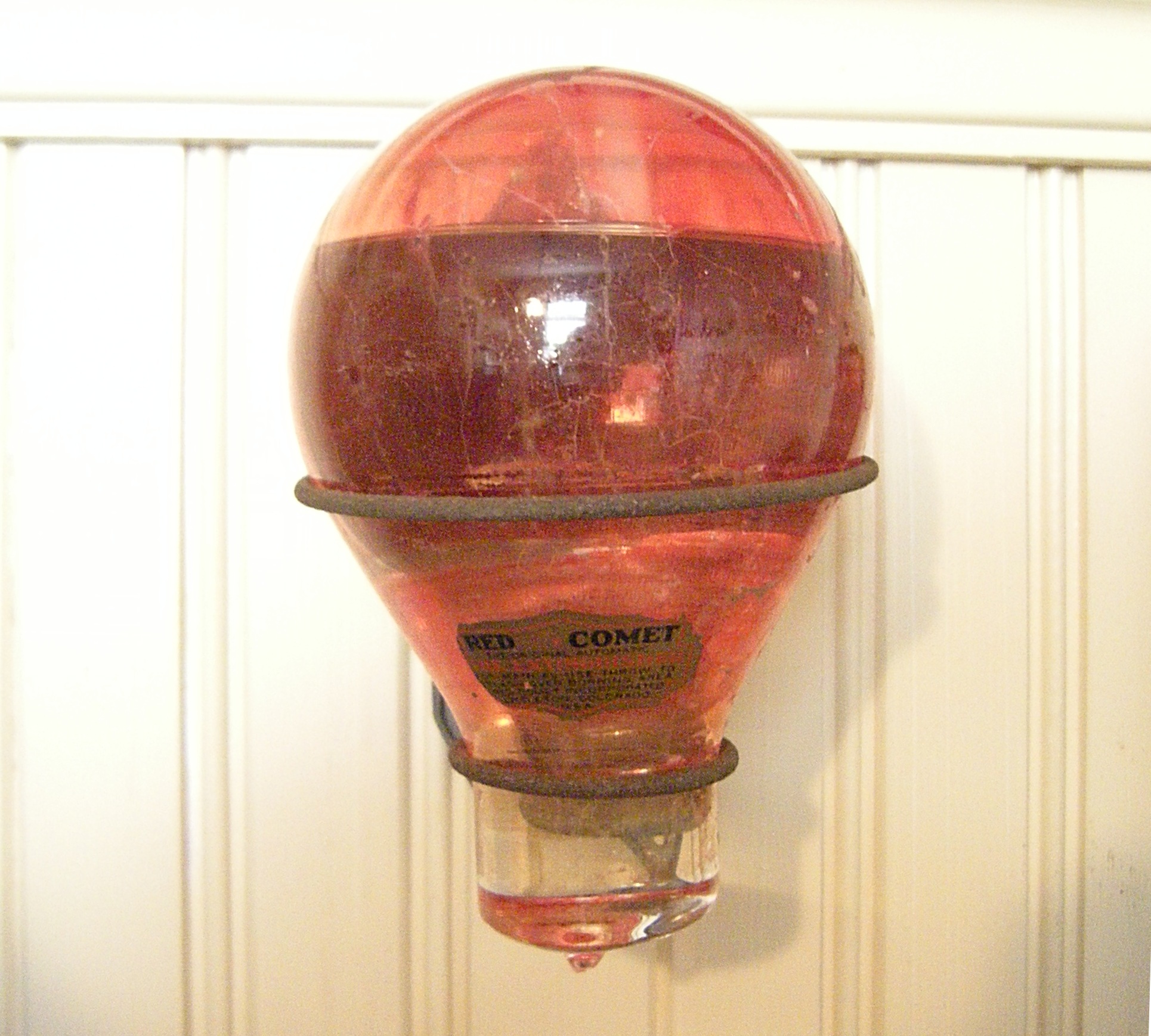
Her body is at the wrong angle to have fallen off the folding step ladder. She must have put one foot on the shelving unit to reach something up high. There’s no way to know if it was the box found broken on the floor, or the graniteware coffee pot found under her body. It is clear the box of fire grenades fell some distance and hit the floor with enough force to shatter four of the six globes inside. Carbon tetrachloride inside the blown glass globes would have turned to gas instantly. At the time of the investigation it was impossible to determine if the effects of the gas were enough to cause the victim’s fall, or if the non-cooled attic was at a sufficient temperature that summer afternoon for the carbon tetrachloride to create phosgene gas and poison her.

No foul play is suspected.