Webcomic Postmortem (A Personal Failure)

I’ve been putting off writing this entry. I’ve told friends I would write it for months. I keep dragging my feet, but I’m just going to try and plunge forward and write it even though I can feel a cold orb of dread forming in my stomach.

I want to talk about failure. Specifically my own failure. Before I wrote about walking away from my epic fantasy cycle in order to succeed. I do not consider that a failure, I simply consider that a project I’m still lacking the skills to complete.

I want to talk about a project I can never complete, the webcomic PFFFT.net. Oh, every so often someone will talk to me about starting it up again and my response is always “maybe” but I know it isn’t true. Today I’m going to write its post-mortem instead.

PFFFT_Filmstrip01

In 1999 I joined an online community centered around a series of EZ boards full of wonderful and creative geeks. In 2001 we launched PFFFT.net (it isn’t there anymore so no link) with a webcomic written by me, drawn by Lis Mitchel with web elements by Jennifer Osborne. The webcomic centered on fictional versions of our webpersonas: Petite Fantome, PixelFish, and DigiFox, who in the comic became PFunk, PFish, and PFox three geek-girls tasked with saving the world. The rest of the comic cast were likewise fictional versions of our internet community. Of the characters who appeared on screen only the computer AI was not based on a real life person.

PFFFT_Filmstrip02

It was, a pretty snazzy comic. Lis’ full-color artwork made it instantly popular, the concept of geek-girl heroes was good, there was an over-reaching story arc planned out, there were lots of little easter eggs, pop culture references, and some of my jokes were pretty good (some were terrible). So what went wrong?

PFFFT_Filmstrip03

Did not plan for Life – We didn’t have much for lives when we started and for some reason assumed this would always be the case. There were two international moves, various health issues, relationships that fell apart, money problems, and a wedding, at various points that caused problems with getting the comic out on time or at all.

No buffer. – This was a rookie mistake. We were so excited about sharing the comic with everyone we did not build up a buffer of at least a month’s worth of comics before going live. We assumed we could just do a bit extra and get a buffer going as we went. Ha ha ha. No.

Artwork was too labor intensive. – If we’d done a proper buffer’s worth of material to start, we’d have quickly realized that having full-color page-style comics took around 20 hours a page. A week’s worth of comic was 60 (unpaid!) hours.

Using Real People is a BAD IDEA (TM). – Everything else lead to a slow death, but this is the thing which put the kind of nails in the coffin that prevent raising it from the grave. There are likeness issues which weren’t a problem when we weren’t making money off the comic, but massively problematic if we were. We absolutely could not continue to put the kind of time into the comic and NOT make money, but we’d tied our hands there. Also, relationships CHANGED. What on earth was I thinking not only putting real people in the comic but working their real-life relationships into the plot. At the time we started this there were a number of webcomics that used fictionalized real people. Of those, I think only Penny Arcade is still around (and while no separation between characters and creators made them successful, it has also bitten them in the ass). You see, I only control what characters do. Character control is required for successful writing and using real people often left me reacting to real world events rather than telling the story exactly as I envisioned. Also, it is TOTALLY gauche to ask the artist to continue drawing a character based on her ex-fiancee during the break-up and turmoil phase that ended up with her living in my house in a different country. I really regret doing so even if she told me it was fine (it was so not fine and I’m an idiot for thinking so). I’d like to take this opportunity to publicly apologize to Lis for all of the stupid things I did and said during that time period thinking I was saving the comic. It was so beyond saving at that point because of how *I* structured the comic and characters in it. Me culpa.

Did not do enough with the supporting website– With the clarity of hindsight. This is probably where I screwed up the most. I should have been putting 20 hours of content up every week in comic, game, and movie reviews, editorials, whatever. I could have had an on-going serial within the universe that went up without art. Ignoring this part of things is what made people stop coming.

Using the name Pfunk for a white girl with blue hair was racially problematic and I rightfully got hate mail over it. It doesn’t matter what I meant by it, it rubbed people the wrong way, and I totally see why. Even if I felt I could reboot the entire story, I no longer feel this is an appropriate name for the character.

Our fans were amazing. We got fan art, fan mail, and even an 8bit sprite flash game. The greater web comic community were supportive and amazing people. From encouragement to guest artists, we had an amazing community and I will always regret letting them down. However, I do not regret the experience or that I ended up taking another path.

Failure is a path to success

Book One

Many years ago I decided to spend the summer rereading through 100 of my favorite childhood books. One of the things I noticed on my re-read is that authors’ first books or the first book of a series didn’t live up to my memory of them. That my memory conflated the character development from all of the books in a series and overlayed it on the events of the first book.

This was particularly illuminating for me because for my first “SRS RITR BZNS” project I’d decided to write a big fat epic fantasy cycle… and it wasn’t going well. You see, I couldn’t fit everything in. First I wrote a draft of Book 1, but then I discovered that left too much out, so I wrote a prequel. There were two side stories I wanted to explore so I wrote two novellas, then there were the short stories… and each one was a little better than the last, but my best work was also the least useful as it required everything else for context. So I had ~  700K words and nothing to submit.

After my re-read I realized all of my favorite authors had been learning as they went too. When I thought long and hard about it, I realized I was not a good enough writer to currently write the big fat epic fantasy cycle (I’m still not). And I could either continue to plink away at that world in bits and drabs until I was, or I could shift my focus to things I WAS good enough to write NOW and work to get them published as I continued to improve. It was going to take the same amount of time and writing either way.

I’d like to say that everything turned around immediately and I started publishing stuff right away, but that didn’t quite happen. I wrote another novel first, one I’m still revising for submission (novels take a long time to fix all the fiddly bits). What changed was I saw a call for stories from an editor I knew well enough that when I came up with a off-beat story, I knew it was the sort of stuff he’d dig. So I wrote it. And it was. And it was published. And I just keep building on that. It still feels like I’m pushing a boulder, but it isn’t uphill both ways in the snow anymore.

Walking away from the big fat fantasy cycle and writing something else gave me the confidence to try other things and start submitting. So that’s how I learned to give up and start succeeding.

I Would Write 500 Words and I Would Write 500 More

Image
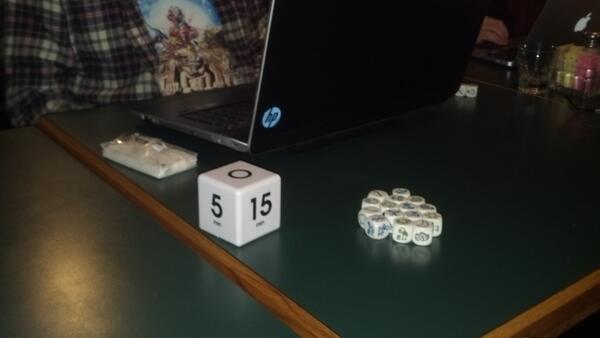
The Yant Method Writing Exercise featuring @AnthonyCLanni’s awesome Iron Maiden shirt


I don’t write fast. I just recently got back from Rainforest Writers Village where many of my fellow writers wrote 10’s of thousands of words in a weekend. I wrote like 3600 words. Sometimes I beat myself up a little for not writing faster, but most of the time I’m OK with it. I write about 500-600 words in an hour if I’m on a good tear, but I can’t maintain focus for hours on end. I also don’t multi-task terribly well (except in listening to music while working- a vestigial skill of my .com days). 

I’ve been most successful at writing by consistency over time, not sprints. I also measure “over time” in weekly or monthly time periods. I am very much a tortoise writer not a hare writer. I try to write an average of 500 words a day rather than absolutely write every single day. I tend to feel better about myself if I’m not flagellating myself every day I don’t write. (I know, it’s a novel approach to try and maintain my self-esteem, but hating on myself got so exhausting I decided to give it a shot.) Some days that means I write 2000, some only 500, some no words at all. As long as I average ~500 I can vary day to day without feeling like crap all the time.  All things in moderation, including moderation. (Which also means, yes, I do feel bad about my progress sometimes even while doing it this way. But that’s OK as long as it isn’t ALL THE TIME.) 

I haven’t been doing so great at this in the last (mumblemumblemanymonthsmumble) little bit. I ended up down a hole due to various life/situational events and let things slide too far. I’ve climbed my way out of the hole but I’m still not back on top of things with my habits and now I’m working to rebuild them all. Getting back to a consistent words per day average is only part of that. I’ve got household things, work things, and *coff* posting here to get back in control. I’m not going to promise anything in particular because I know I’ll only disappoint myself. What I do promise, is that I’ll do better. That’s not a very high bar right now, but I hope it will continue to get higher as I keep on keeping on. 

Terrible at Self-Promotion

I should have posted this last week, but somehow (procrastination, discombobulation, & feeling ill) I didn’t manage. The anthology WINTER WELL which contains my story COPPER was given a starred review in Publisher’s Weekly and they describe COPPER as:

a fast-paced procedural that opens with a humorous hook before taking a turn for high-stakes seriousness.

Which is a better one-sentence description than I could EVER manage. Read the whole review, it’s short and does a good job of explaining not only my story but the anthology as a whole. It is a super fantastic anthology and I really enjoyed ALL the stories. It is exactly the kind of genre fiction I WANT to read and I’m so happy that Crossed Genres exist and continue to publish great fiction. 

Searches

My friend & writer, Wendy Sparrow does Watchlist Wednesday where she posts a list of the things she has searched for relating to her writing for the week. I joked that I should post a similar one but not differentiate between work (museum related queries) and writing related ones and see if people can tell them apart. The following is actually a mix of those PLUS personal searches from what I found in my browser history. You tell me if you can tell the difference. 

english colonial girls baby names

55,000,000km to miles

steampunk goblet

cup bell and book

putting a research station on mars

atmosphere of mars

indian american names

names meaning twins

spooky mouse ears

feed a goat?

enhanced driver’s license 

dolph lundgren

best thumb taping ever

how to write author bio

spindle of ship

writing horse

latin for spinach

Flaius Josephus

bloodhound gang

parts of the hand

flat mollusk

one-shelled mollusk

flat limpet

Social Media

I’m mostly writing this entry for my own benefit. So I can pin down my thoughts on how I use social media right now and can track how that changes in the future. Just thought it might be helpful to see how the inside of my brain works on this topic for some people. If it isn’t, no worries. There is no right way to do such things.
Social media is most important to me for connecting and communicating with people. I live pretty far off the beaten path and only really see friends and colleagues every few months. However, I talk to them online almost every day and that’s drastically important to me personally and professionally. I use Twitter almost exclusively supplemented with blog entries here and leaving the occasional blog comment. I have a Goodreads and Amazon Author page but I’m still learning how I want to use them. I really should get around to adding books I’ve read on Goodreads for example rather than just the default # the sign up required of me (which were NOT books I would have picked).
Tumblr eludes me as a social media program. The way it threads conversations and attributes posts absolutely breaks my brain. I like that it is a public platform (you can see posts if you don’t have an account) and do read posts that people link elsewhere, and I think it is amazing for visual posts, but I haven’t felt the need to adopt it myself. Maybe I will in the future. Maybe I won’t. Don’t have an opinion either way, just haven’t done it.
I don’t use Facebook because I really dislike the User Interface, and have some concerns with privacy issues. I do have a Facebook account simply so that family and long-lost friends have a way to contact me if they don’t currently have email for me. I don’t keep my Facebook account logged in due to privacy concerns and I don’t remember the password because of this, so when I DO need to log into it I have to reset the password which makes it rather annoying to use. If people use a facebook link to an image or post that requires you to be logged in to see, I simply do not see it. It isn’t personal, It just would take me 15 min of dinking around to see it,  and I’m pretty sure the picture isn’t THAT cute or if the information is really important there will be another source to look at for it. I totally get why other people love it. It just isn’t for me.
I like Twitter. It allows me to read and have public conversations about everything. I can jot down little funny thoughts and share my day to day in a way that’s conducive to conversation. Twitter is my main form of social engagement. I was a teenager in the era of local Bulletin Board Systems (BBS) so it feels very natural to connect to people in this way. Here’s some of the “rules” I keep in mind for myself when I use Twitter.
Minerva’s Rules for Minerva (& no one else) on Twitter
  • Only follow and interact with real people being people or link aggregators that are consistently interesting. If a stream is nothing but promotion you’re basically subscribing to a constant commercial and that’s lame.
  • Life is too short to follow people or publications that constantly bring you down or make you feel terrible.  Do not apologize for taking care of your own well-being.
  • You do not have an obligation to read every tweet on your feed. If you fall behind and declare Twitter Bankruptcy, it’s fine. If you only check in on the stream every so often and never “catch up” that’s fine too.
  • If in doubt about tweeting about something– don’t.
  • Do not endanger your own safety or the safety of others through anything you tweet.
  • Turn off “unfollow” notifications. No point in worrying about it. Be yourself and let others do as they wish.
  • Do not expect reciprocity or deal with those who expect reciprocity on follows/retweets etc. Treat Twitter as a party where people wander from conversation to conversation and everyone is free to engage or not, as they wish.
  • Typos happen. Don’t beat yourself up or anyone else over them.
  • Treat swearing the way you do at work. Generally avoidable but occasionally appropriate (more in personal conversations than directly to public). ((I swear about 200% more in person than I do on Twitter, and do not avoid it in my fiction))
  • Use your small platform to boost people you like up, not tear down those you dislike.
  • Try to be kind.
  • They’re your rules (you can break them if you need to) only you enforce them.
How do you use social media? Do you have any rules for yourself?

Beta Readers

In case you’re not familiar with the term, Beta Readers are people you trust to read and give feedback on your project prior to submission on a one to one basis. Beta Readers are WONDERFUL people. They are your first line of defense against mistakes both large and small. Because they ARE your defense, you don’t want to use someone who thinks every word that drips out of your pen is a masterpiece, nor do you want someone as critical of every word as that doubting voice in your head (it can do THAT JOB just fine on its own). You want someone who gets your style of writing and can tell you when you’ve failed to do what you set out to do, or give a high five when you totally nail it. 

For a long time my main Beta Reader was Wrong For Me and I didn’t realize it. It wasn’t so much that they didn’t make good comments as their comments were happening at the wrong time in the creative process. That isn’t the Beta Reader’s fault, that’s mine. I was seeking (and getting) high level editing on my roughest drafts. The best analogy I can use is it’d be if you were trying to sand a piece of lumber using a super fine grit sandpaper.  You’ll get there eventually but you’d have gotten there A LOT sooner and easier starting at a low grit working up to the high. 

 What changed for me, was my much younger brother Chris got old enough to be interested in what I was writing. He would read over my shoulder or pester me with questions. He became, and still is, the first person to read anything I’ve written. He isn’t an editor or a fellow fiction writer (at least not yet). He’s just interested in my writing and my characters and asks good questions. He’s a set of eyes outside of my head that still knows more about the story and things than the average reader is going to. I draft longhand and do one rough edit pass as I type it up and then Chris reads it and gives me comments before I do the “first” edit.  

It’s that “first” edit which then goes out to Beta Readers. I have a pool of people I draw from based on availability and expertise. If I know someone has first-hand experience relevant to the story, I try really hard to make sure there’s time for them to at least give it a once-over read. If I know I’m going to have a lengthy project come up for a read, I try to feel people out to see if they’ll have time in their schedule. I have Beta Readers who annotate pdf files, those who do track changes in Word, those that send me email with thoughts, and some that just chat their thoughts and reaction over IM or Skype. I’ve found that I prefer getting a mix of readers who write and those that don’t. I don’t take everyone’s comments to heart, but I do listen very carefully to their questions about the story. If everyone is asking a question I want them to be thinking about, that’s a feature, not a bug. If everyone or even most, have a question about something I thought was perfectly clear– I’ve got to fix that. 

I can’t tell you how many times a Beta Reader has put their finger on something in the story that was bothering me but I couldn’t see from my perspective on the story. Once you know what isn’t working it’s usually a lot easier to fix it and that’s why Beta Readers are awesome. 

Do you use Beta Readers?  

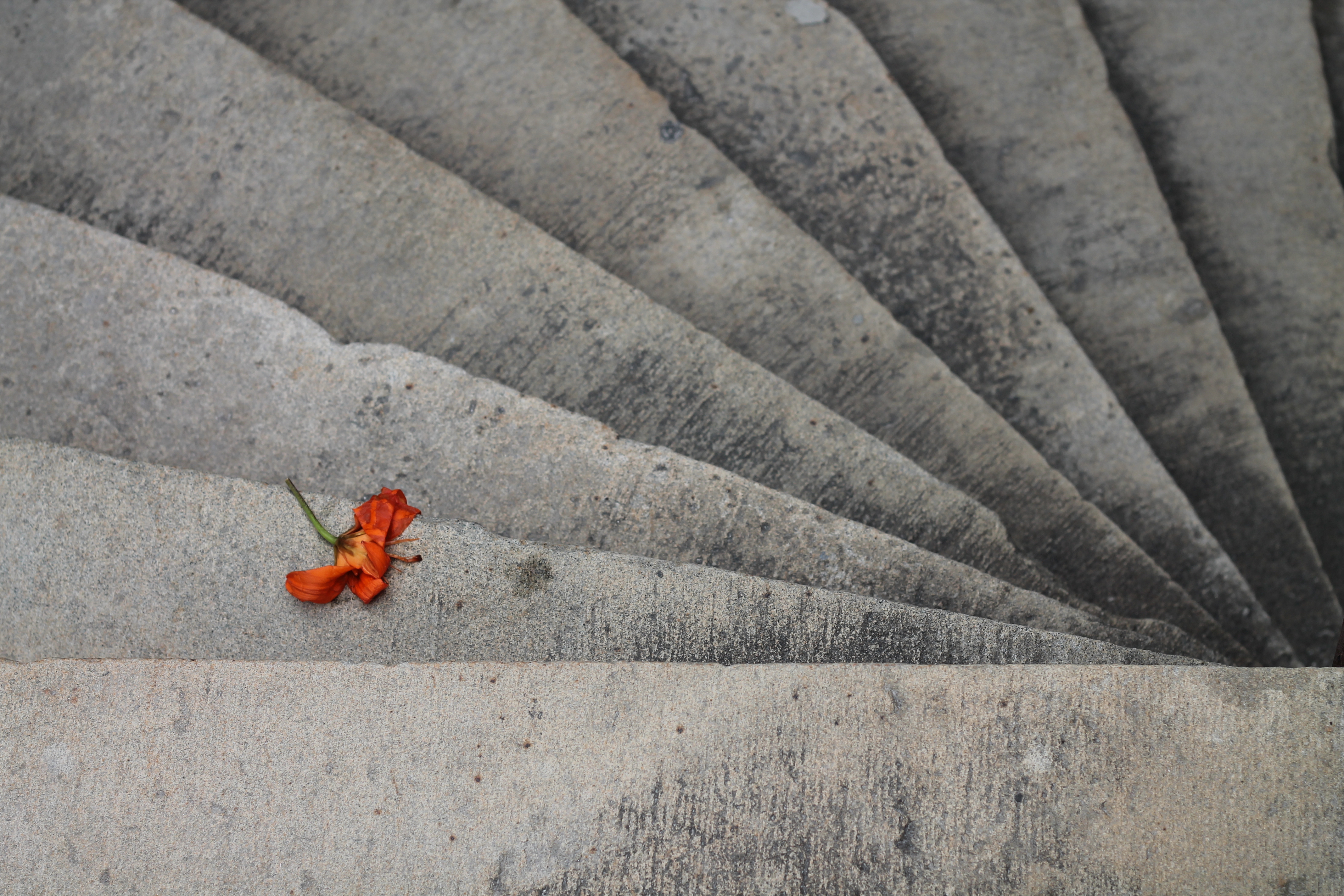
Writing up that Staircase

Photo by sarcasmically.com

I used to live above Golden Gardens beach in Seattle. There’s a path that leads from the top of the bluff down two really long steep staircases and under the train tracks to the beach. It’s a pleasant walk down, but one hell of a climb back up.  Invariably there is always some incredibly fit person who is jogging up the stairs carrying a bicycle and making you feel like an absolute chump for struggling along. I remember one particular climb that seemed to be taking an extra long time and a friend said, “All we need is ice cream truck music blaring over and over, and this would be my version of hell. Constantly walking up stairs for eternity with the same musical refrain blasting out of terrible speakers.”

Despite this, I think of my writing career journey as a really long staircase I can’t see the top of, and can no longer see the bottom of. There are lots of places along the staircase that stretch out into landings, some of them quite large with whole seating areas. It seems like maybe I skipped a few steps here or there, but generally it’s been one big, long, steep staircase.

I think I had this impulse when I was really starting out to seek out someone I perceived as being at the top of the staircase and asked them for a hand up. I didn’t understand that it’s hard for them to do much more than maybe shout down words of encouragement and that I’ll make it, I just have to keep climbing. I grumbled about how they weren’t really helping and if they’d just give me a hand up we’d get there a lot faster.

Then one day, someone sent an email asking for advice on how to get to where I was at the time. For me, it was a teenage boy in absolutely nowhere Australia, who emailed and asked for advice on his webcomic (I was writing one at the time). I don’t remember exactly what I said when I wrote back, but I think it was essentially “Just do it. I’m just a person, the artist and webmaster are just people. We just decided to do it, you can do it too.”

That’s how I realized that the people ahead of me on the staircase were just people too, they were still chasing the people they perceived to be ahead of them and most of them hadn’t the foggiest idea what to tell me that would actually help. All I could do was keep climbing those stairs.

It wasn’t until YEARS later that I realized what DOES help, is to talk to the people on the steps right around you. The ones in arm reach. The ones you can help up a rough patch in the steps or they can grab your arm if you trip. Actively participate in the conversation happening WHERE YOU ARE. Those are the people who will potentially continue to be on the same part of the staircase as you. Some of them will motivate you to keep climbing out of competition, some will motivate out of friendship. All of them are worth knowing, worth talking to. Some of them will stop climbing and some might be that incredibly fit person carrying a bike, but the ones that travel at roughly the same pace as you will support you in ways you or they can’t possibly imagine.

It isn’t a race. There might not even BE an end to the stairs, but the only way you can fall behind, is to stop climbing. If you keep talking to the people around you, it makes it a lot more difficult to imagine the ice cream truck music or at least organize a sing-a-long to drown it out.

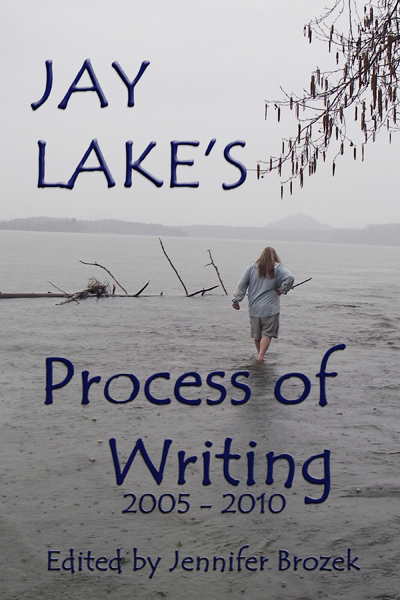
Jay Lake’s Process of Writing 2005-2010

Image

In early 2012 I asked Jennifer Brozek about doing a short stint as her editorial intern thinking she’d have me reading slush and doing a few odd jobs on an anthology or something. Shortly after I asked her this, she asked if I’d want to be the editorial intern on a project collecting the writing advice of Jay Lake’s blog.

Unknown to Jennifer, Jay Lake’s blog is one of the first writer blogs I started following on a regular basis when I got serious about writing. So I THOUGHT I knew what I was getting into.

My job for the project, was to read everything Jay had ever blogged from 2005-2010 and collect all of the entries related to writing. I figured it’d take a few days of work… Have I mentioned that Jay Lake is the reason I started using a RSS reader in the first place? He generally blogs at LEAST three entries EVERY DAY, sometimes this stretches to nine or more entries if a topic needs periodic revisiting and linking to throughout the day. 

In a happy fateful decision, I chose to read backwards in time, starting with the most recent entries and working toward his earlier ones. The further I got back in his career, the more his writing issues sounded like the ones I had. That’s a pretty comforting, yet terrifying gift to get as a writer. I’m on the right path, but no, it never does end. 

He doesn’t tell you HOW to write. He tells you how HE writes and leaves it up to you to figure it out. Mostly he’s talking out loud to himself trying to figure out his own process. It’s a strange book, he didn’t write these blog entries standing behind a podium and lecturing, he wrote them as a conversation with himself, and the readers of his blog. If you like things clean and neat and organized, this isn’t the book for you. Sometimes he raises the questions without giving any answers.

We’re all looking for the answers, and sometimes it’s just nice to hear the stories of someone ahead of you on the path even if the answers they found aren’t the ones you need.

It’s been a year since I read these words of Jay’s, and now going back over them I realize how many of his little terms and descriptions of the writing process I’ve picked up and internalized. I absolutely wouldn’t be the writer I am in 2013 if I hadn’t worked on this project. I also wouldn’t become the author I hope to be in the future. 

Thanks Jay.

New Release: Winter Well

Image

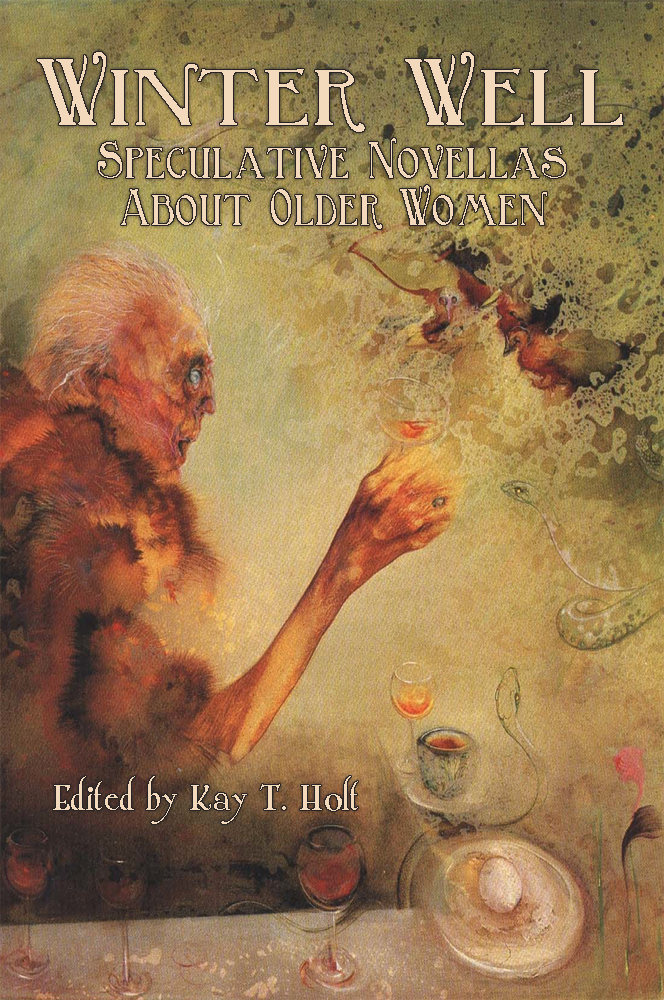
Winter Well: Speculative Novellas About Older Women

My novella Copper comes out today in Winter Well from Crossed Genres. I’m ecstatic to be a part of this anthology as a writer, and I’m even more ecstatic I got to read this anthology.  The stories in the book gave me the same sense of wonderment while showing new truths about the world around me, that I remember having in my first forays into science fiction.  

I decided to skim through the book the other night as I hadn’t read the other stories yet. I was quickly sucked into the collection and it didn’t let go until I was finished at 3 AM. There’s something in this collection for everyone. Even if you don’t enjoy my story, I’d bet one of the others will grab you and linger on in your mind after.