Holding Collections In Public Trust

Museums hold collections in public trust. This means people like myself who take care of collections do so on behalf of the public. At its most grandiose, it means we take care of items to provide a material history of the entire human race both past and present. In more practical applications, it means taking care of objects on behalf of the community for whom the museum serves. In my museum’s case this is a geographic area, which means our community and therefore our mission must grow with the changes in the region itself.

Museums are not static. They can stagnate, yes, but to remain static means death. A slow death of deterioration and declining funding, but death. A museum that collects without cataloging, item care, and interpretation of objects is just an episode of Hoarders that charges admission. Cataloging means knowing what you have, where it came from, what you know about it, and where it is. Item care is making sure items are stored correctly in a way that slows their eventual deterioration without causing damage. Interpretation is what you know about the object, how it was used, who used it, and shared with researchers and visitors in a way that can be understood.

The example that sticks out in my mind is an object I haven’t yet been able to display because I can’t yet convey its importance and story in a way that school children through seniors will be able to get something out of it. The object is shaped sort of like a squat rocketship without fins and about the size of a keychain mace canister. It is the detonator to a Vietcong rocket. The rocket it belonged to went through the roof of the barracks of the helicopter mechanic on an entirely surrounded US installation during the Tet Offensive. It had absolutely hit its mark, but he hadn’t been there… though one of his buddies was. The next morning the mechanic fixed the helicopters that had been hit but not destroyed in the same attack and those helicopters went out and killed thousands of people.

I took this man’s story in person with him looking me in the eyes as he told me this. He was not proud of what happened, he had no doubt his barracks were targeted to keep him from doing what he ultimately did, and he felt he did his job well, but had no illusions of what that led to.

It’s my job to find a way to convey SOME PART of that story and even my reaction as the generation that came after… and to make sure that detonator survives into the future to be reinterpreted by those who will come after me.

Fountain Pen Friday: Platinum Preppy

IMG_20140508_174246_074
Laying on one of those small hotel notepads.


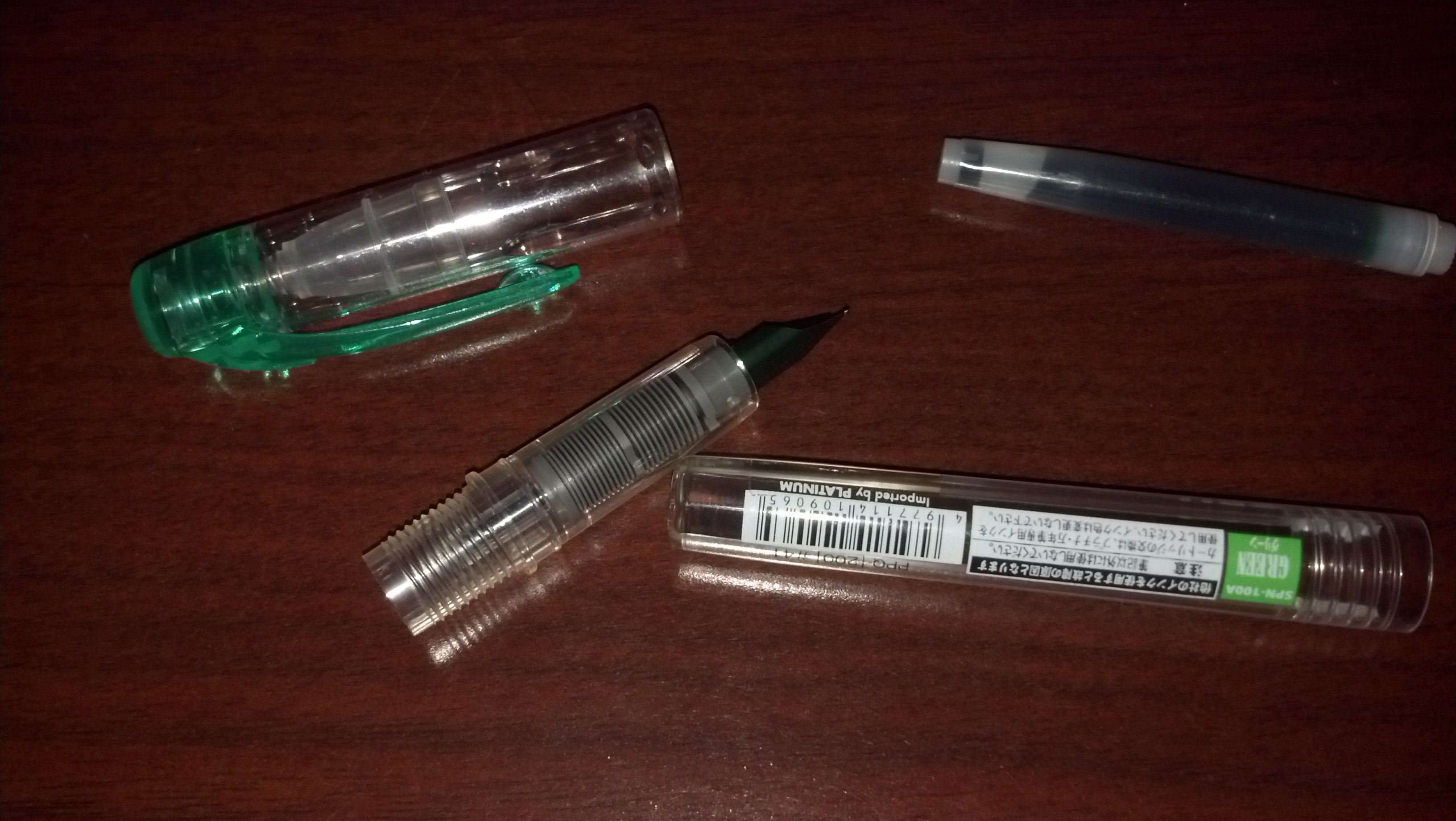
Welcome to a special “I took these photographs at the hotel at World Horror Con” edition of Fountain Pen Friday. Considering how much I love the Pilot Petit1 Mini Fountain Pen I decided to give the Platinum Preppy (Jet Pens, Goulet Pens, Amazon) a whirl when I ordered a bunch of stuff recently. 

Pen and all its fabulous pieces.

I really enjoy using this pen. It’s been my daily carry since I started using it.

In hand without cap.

It’s definitely a full-size pen, but it writes with the same ease and fine line that the Petit1 pens do.

in hand with cap
in hand with cap

I bought a fine nib and it writes with a very nice narrow line that is absolutely no problem in smaller spaces.

writing on small hotel notepad

Good news for those who do eyedrop conversions, this pen is PERFECT for them. Because it is a larger pen it will hold a ton of ink. There’s an added o-ring as per: this tutorial, but holy cow this thing would hold a massive amount of ink. I may make this pen my first eyedrop conversion after I write out the cartridge.

The Good

  • Good-looking plastic pen
  • eyedrop convertible
  • round grip
  • secure snap on cap for traveling
  • Cheap (Just over $3 at Jet Pens, just under $4 at Goulet Pens, Amazon pricing terrible)
  • writes nice.
  • writes FAST

The Bad

  • hard grip
  • proprietary cartridge
  • While not heavy, it is not as light as the Petit1 (because it is larger)

Overall grade: A

The Petit1 still remains my favorite, but this one is RIGHT UP THERE and I reserve the right to change my mind if it is a superior eyedrop conversion.

Blog Hop

Jennifer Brozek asked me to do this Blog Hop with these questions:

1. What am I working on?

I’m working on a couple different short stories right now, but I can only talk about the alien symbiote chest hair story at the moment.

2. How does it differ from others of its genre?

I am trying to genderflip a particular trope I really really hate to see if I can make a good story while making a point and working out some of the frustration and disgust I have.

3. Why do I write what I do?

To cope with having the imagination I do.

4. How does my writing process work?

Long fiction is different but for short fiction:

  • First, I get a deadline.
  • Then I get an idea.
  • I write down the idea and discover I did it wrong.
  • I re-write it until it feels like it might be working, then I send it to beta readers.
  • I don’t think about the story for a few days.
  • I take the feedback and use it to edit the story.
  • Submit by deadline.

If anyone would like to be tagged to do this on their own blog, leave a comment below.

Non-Fiction Museum Series

I just got back from World Horror Con in Portland, where I met many wonderful new people, had a good time, and came home with the same body parts I left with. I am, however, very tired and am in the process of losing my voice so I’m going to keep this post short this week. My hope is to over the next few months of Mondays to pull back the curtain a little on what goes on with museum collections.

What kind of things about museums do you want to know? I know when I was young I always assumed there were crack teams of PhDs in the back rooms studiously making all the labels for the objects. It wasn’t until I was an intern and I was typing up my 200th label about turquoise jewelry… I realized the truth was a lot more mundane and sometimes relies heavily on being able to use Google to fill in gaps the object records leave.

Another thing I never thought about was the weird gaps in museum collections, because everything is what people THINK to take to a museum so there’s a lot of wedding dresses and not a lot of tennis shoes. That museums don’t really end up with consumable items. Museums get a lot of items that were hardly ever used in their original intended uses. A lot of the time it becomes a physical record of special items or unused items. Museums are very specialized records of material culture, but they are a very limited and incomplete one.

The items I get the most excited about are the ones that show the wear and usage. Things that can tell a story beyond the object. After all, a museum without stories is just a building full of stuff.

Fountain Pen Friday: Pelikan P55 Future

Pen in parts with standard converter

To be honest, I don’t remember when or how I got the Pelikan P55 Future, but I’m so glad I did. (Jet PensAmazon)

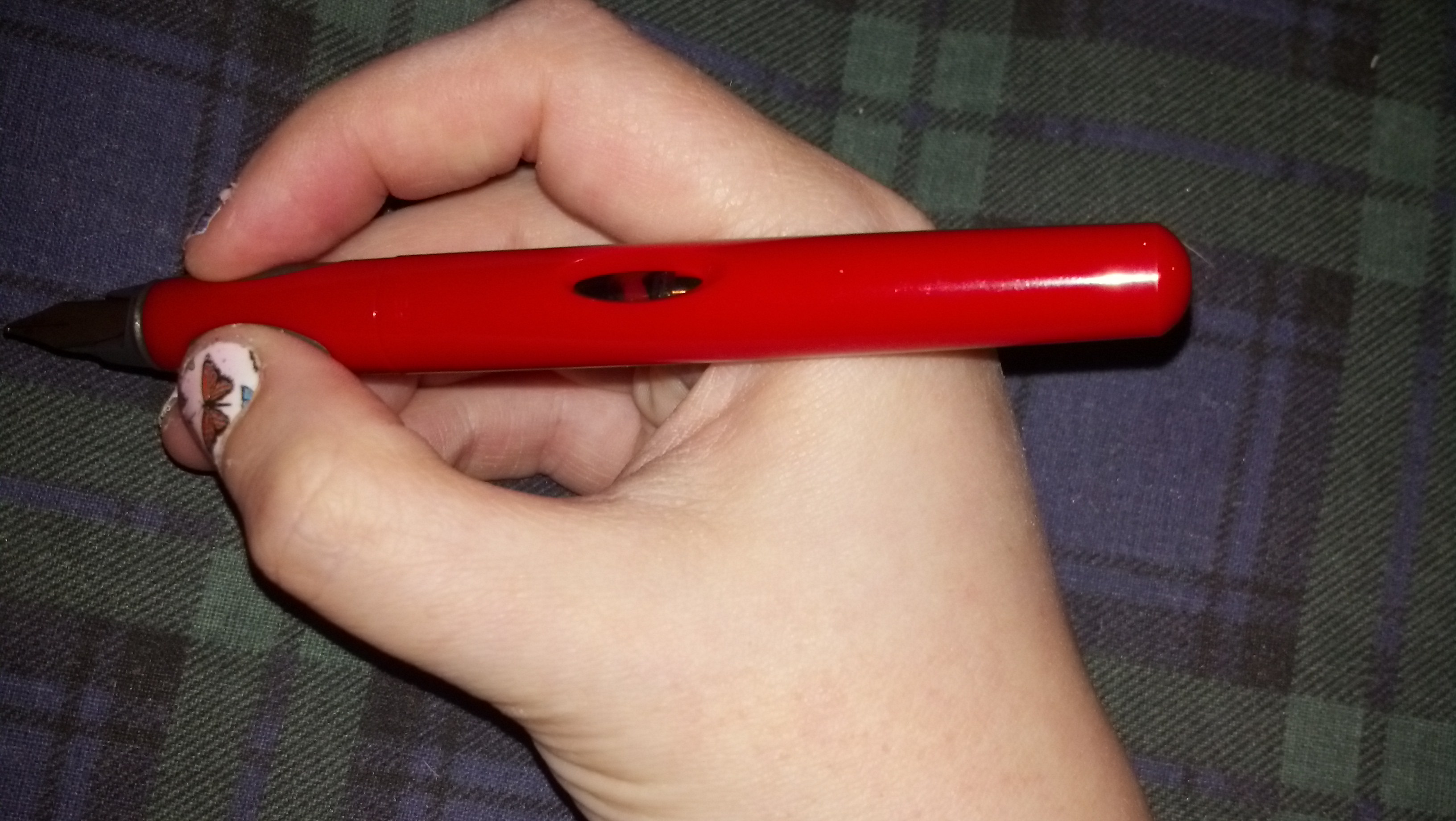
Pen with cap in hand

I don’t particularly like the color red, but I don’t seem to lose this pen as much when I’m using it. So maybe the red is a feature. It also comes in black but only in a broad nib (as far as I know).

Pen without cap in hand


It has a plastic pen body with a window in the side so you can see how your ink level is. Unlike the Scheaffer from a few weeks ago, thought has gone into its placement on the pen. The hole is in a spot it will not rub against your hand while you write, even for someone with small hands like me.

ink porthole
ink porthole

My favorite part of this pen is that it has a rubberized grip exactly where you need it.

Top Grips
Top Grips
bottom rubber. This part rests against the inside of your middle finger as you write.

My middle finger has a permanent callus from how I grip my pen while writing. I REALLY appreciate the extra cushioning on this pen.

Oooo and it has a sexy looking nib.

It isn’t my favorite looking pen, but it is by far one of my favorite to write with. It writes so very smoothly, is easy on the hand, isn’t heavy, and just a joy to write with.

writing test
writing test


The Good

  • lightweight
  • plastic body (not dentable/stainable)
  • standard cartridge/converter
  • cushy grip
  • a joy to write with
  • reliable
  • red is easy to find on the sofa when you set it down

The Bad

  • no variety of pen body colors
  • plastic looks kind of cheap
  • medium and broad nib only

Appearance: B-

Writing: A+

Overall grade: A-


Flash Fiction Finals and Where to Find Me

Thanks to all of you, I’ve made it to the Flash Fiction Finals! My last flash fiction story is up at Jaym Gate’s Blog. Be sure to check out the audio version too. I had a lot of fun doing this and I’ll let you know when the charity anthology of all the stories goes up for sale.

I’m at World Horror in Portland Oregon this week and I’ve got panels! Hope to see you there!

FRIDAY
10:00 AM – 11:00 AM, Ross/Morrison
Panel: The Short Form
(Ellen Datlow, Nick Mamatas, Norman Patridge, John Shirley, E. Michael Lewis, James Lea, Minerva Zimmerman)
The short horror story delivers a great deal of payoff to author and reader alike, and is one of the best ways to deliver horror. Authors in the field discuss the most efficient means of administration, animation and continued locomotion.

SUNDAY

11:00 AM – 12:00 PM, Ross/Morrison
Panel: Between Two Worlds: Finding Time To Write
(Lois Gresh, Minerva Zimmerman, Cameron Pierce, Sally Bosco, Sunni Brock)
How do we as writers carve out a big enough chunk from our ‘other lives’ to sit down, clear our minds, and practice our craft?

Museum Mishap Monday: Recap

I started Museum Mishap Mondays in 2012. I’d written a Gashlycrumb Tinies parody of things in a museum that could kill me, and decided to write out each letter of the alphabet as a flash fiction playing out some of these hazards. I’m really glad I eventually finished. I think I’ve learned a lot in the process, including that I don’t particularly enjoy killing myself in fiction. Starting next week, I’ll be taking the time to explain what really goes on behind the scenes in museum collections. No museum fiction for awhile, but plenty of non-fiction to come.

And now, to commemorate finishing this series I’d like to post what started it all. Some of these changed when it came to writing fiction, many did not.

A is for arsenic which coats taxidermy

B is for botulism in old jars and cans

C is for carbon tetrachloride, which turns to nerve gas

D is for dry cleaning fluid in old mayonnaise jars

E is for ethyl alcohol specimens which stink and can spill

F is for firearms with still chambered rounds

G is for gravity, it’s quite the bitch.

H is for haunted museum, or at least some people say

I is for insecticide sprayers with pesticides historic

J is for jabbed by an old rusty nail

K is for knives found in surprising dark places

L is for lead, its corroded powder easily inhaled

M is for Mold, black and quite toxic

N is for negatives that spontaneous combust

O is for ordinance unexploded and still live

P is for picric acid used to treat burns and explosive when dry

Q is for questionable donor who wants to meet in secret

R is for radium, they painted on all sorts of things

S is for shelving and its trend to tip over

T is for thermometers and other mercury devices

U is for uranium, found unexpectedly

V is for veterinary equipment coated with pathogens

W is for waste once used medically

X is for x-ray machine still irradiating

Y is for your own carelessness– most dangerous of all.

Z is for zapped by old wiring you meant not to touch

If you’d like to read them all again- Museum Mishap Monday can be found in its entirety here. 

Fountain Pen Friday: Pilot Varsity Disposable


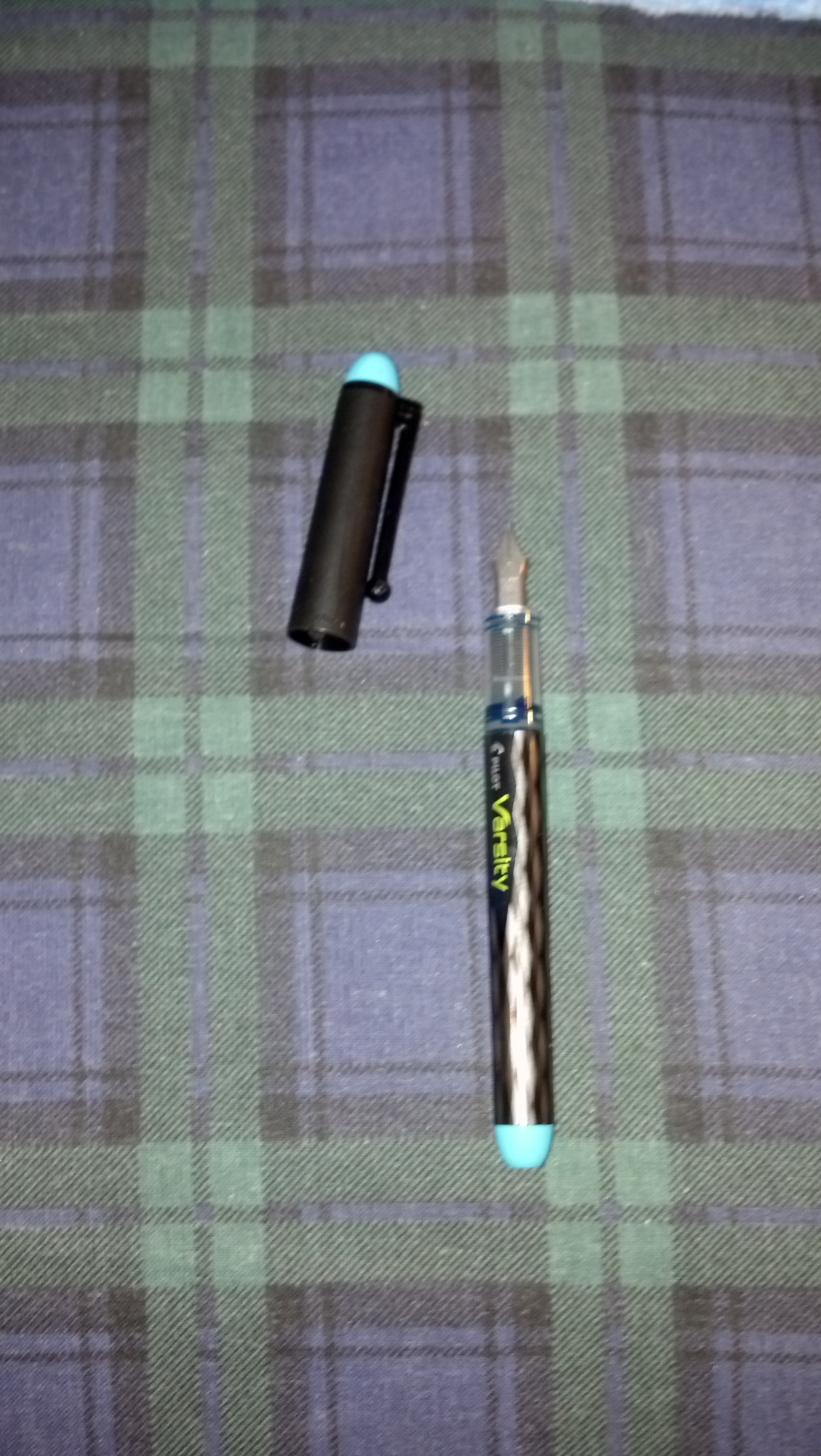
Pilot Varsity Disposable with cap off (turquoise ink)

Are you uncertain about fountain pens? Do you have bigger hands than I do, but still want an inexpensive fountain pen? The Pilot Varsity (Jet Pens, Goulet Pens, Amazon) is a disposable fountain pen that comes pre-filled with ink (7 colors) and is a great pen.

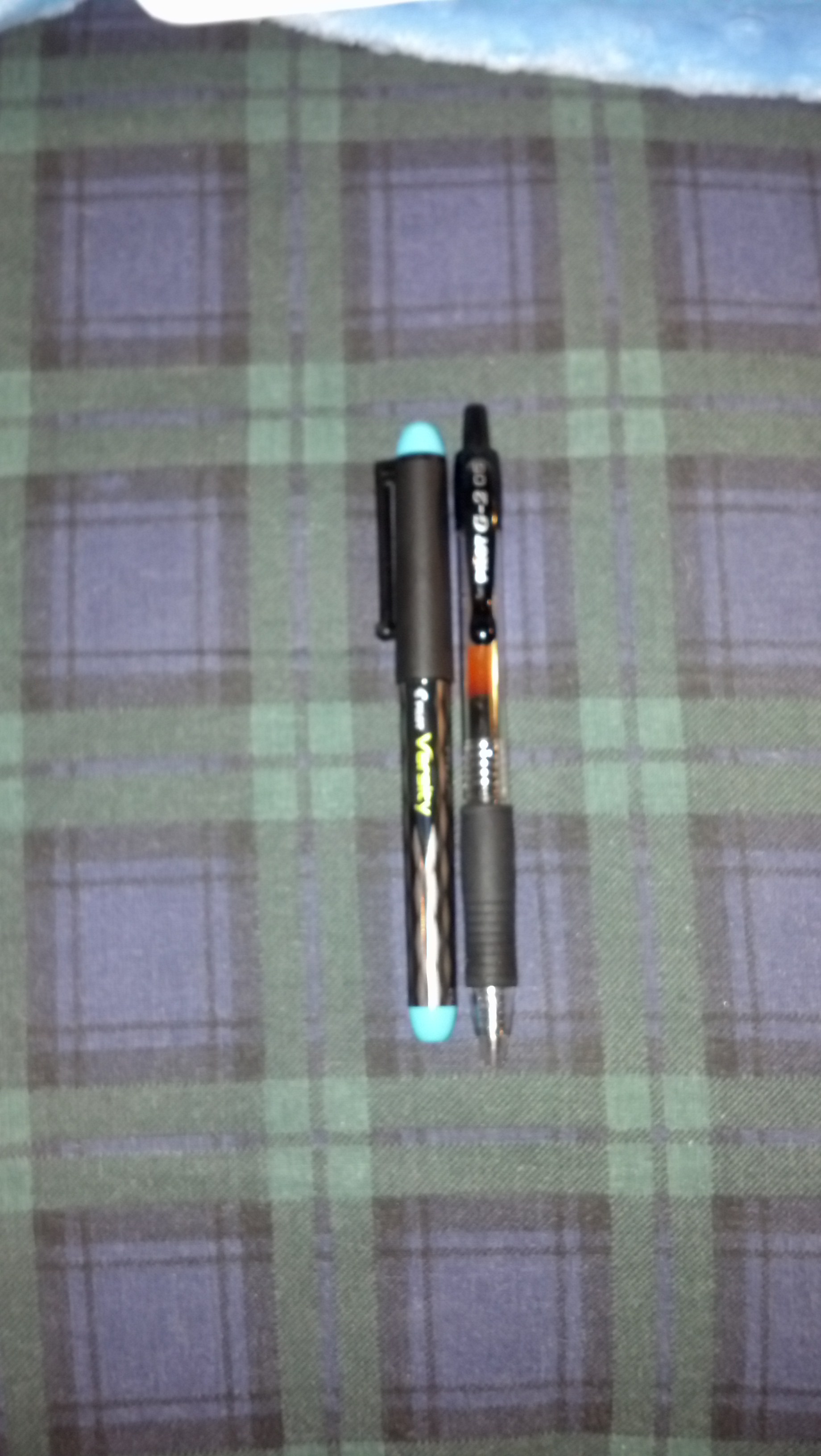
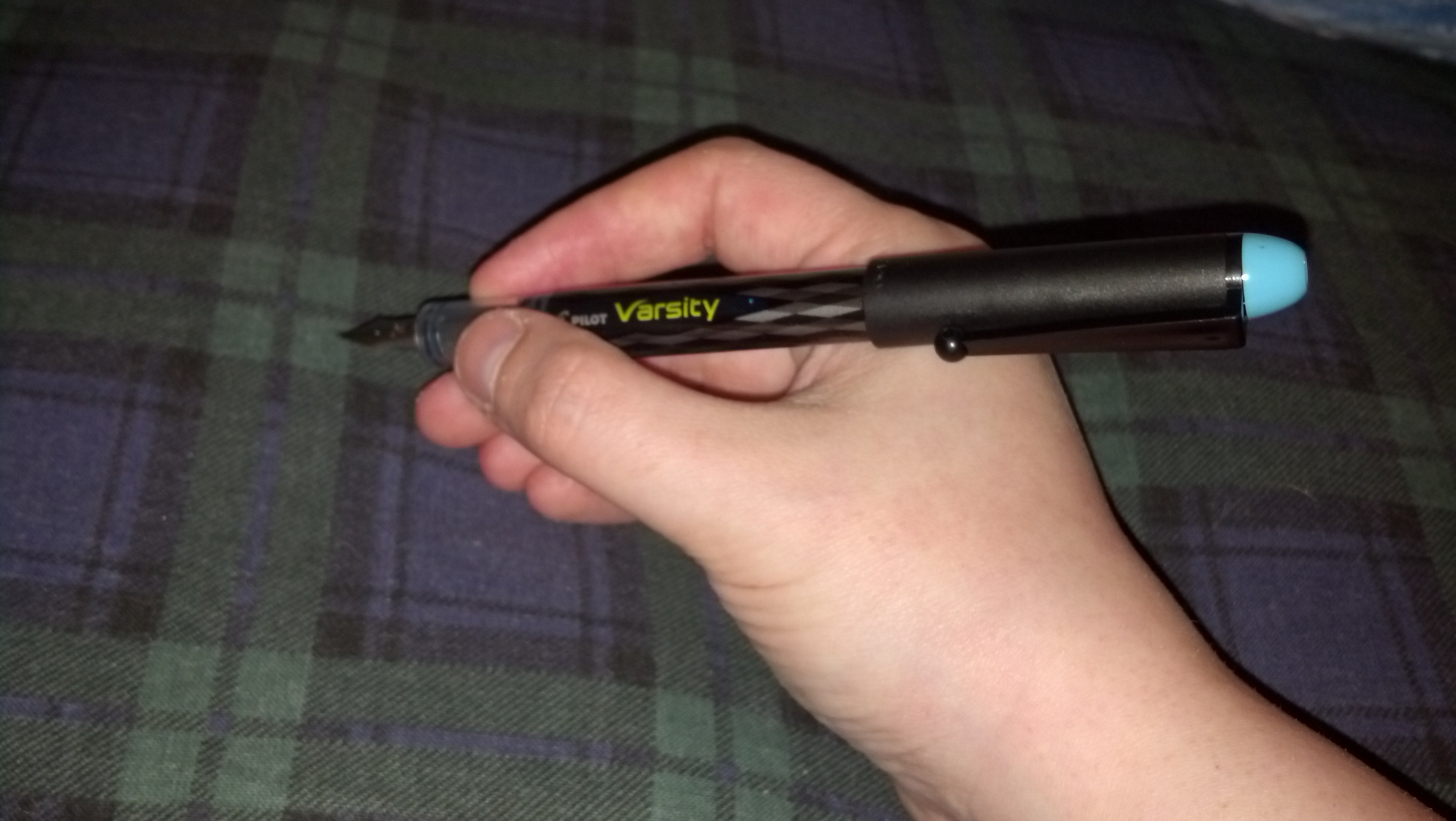
It is pretty much comparable in size to any standard disposable pen.
It is pretty much comparable in size to any standard disposable pen. (Pictured with Pilot G-2 Gel Pen)

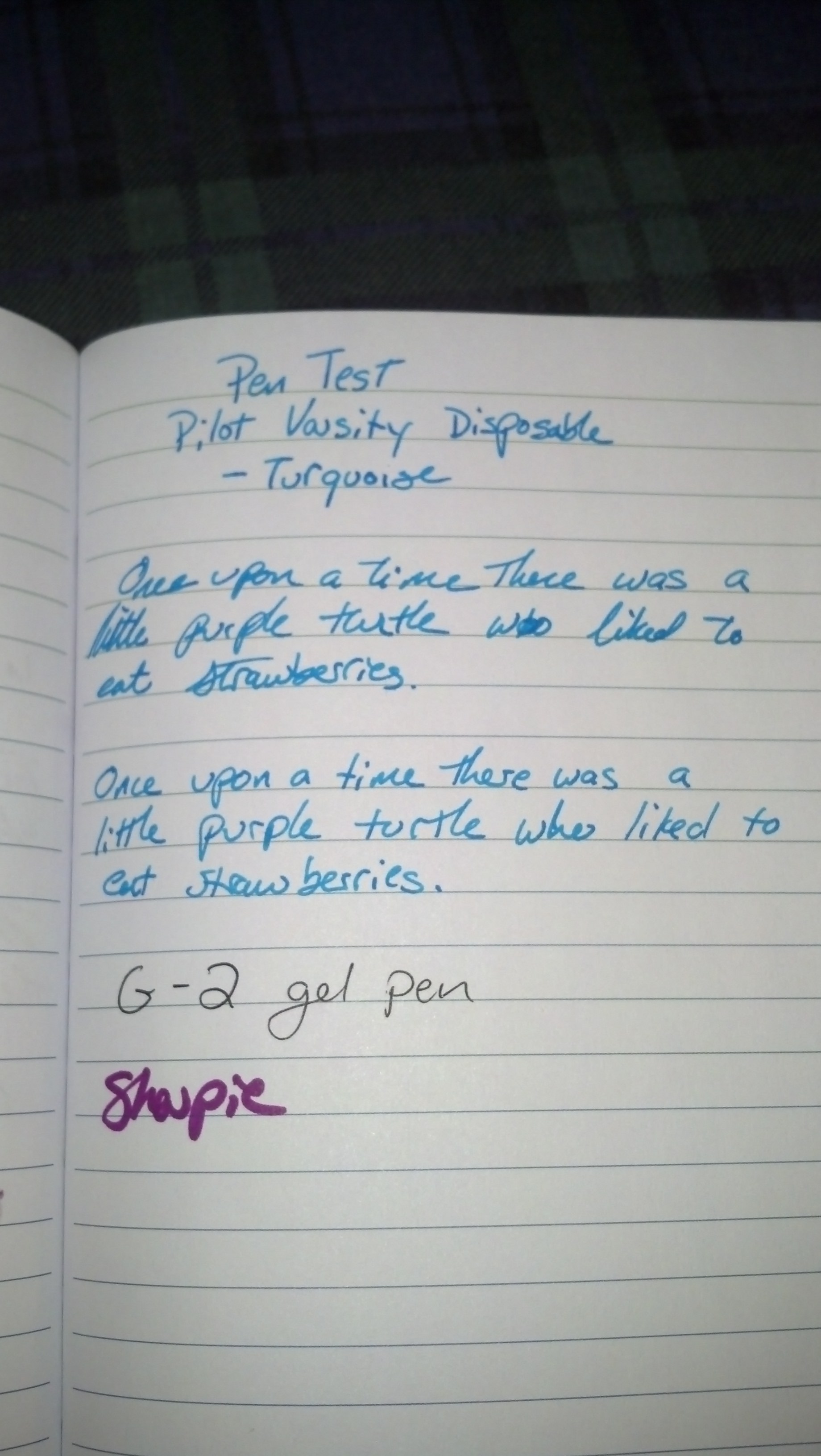
I like this pen. I don’t like it quite as much as the Petite due to my freakishly small hands, but it is reliable, writes well, does a pretty nice thin line, comes in great colors… there’s not much not to like about it.

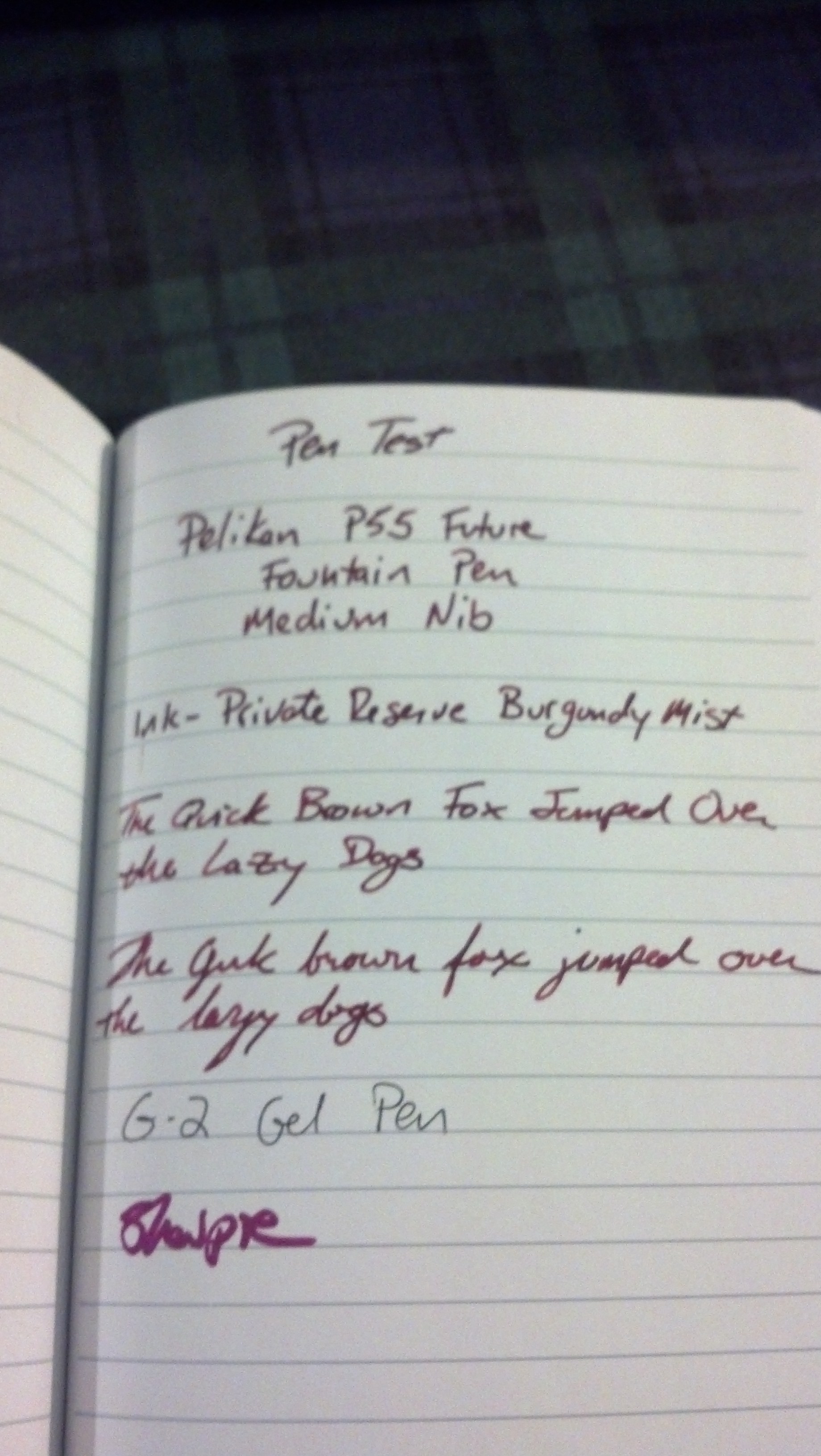
Pen Test
Pen Test
Pen With Cap, in hand
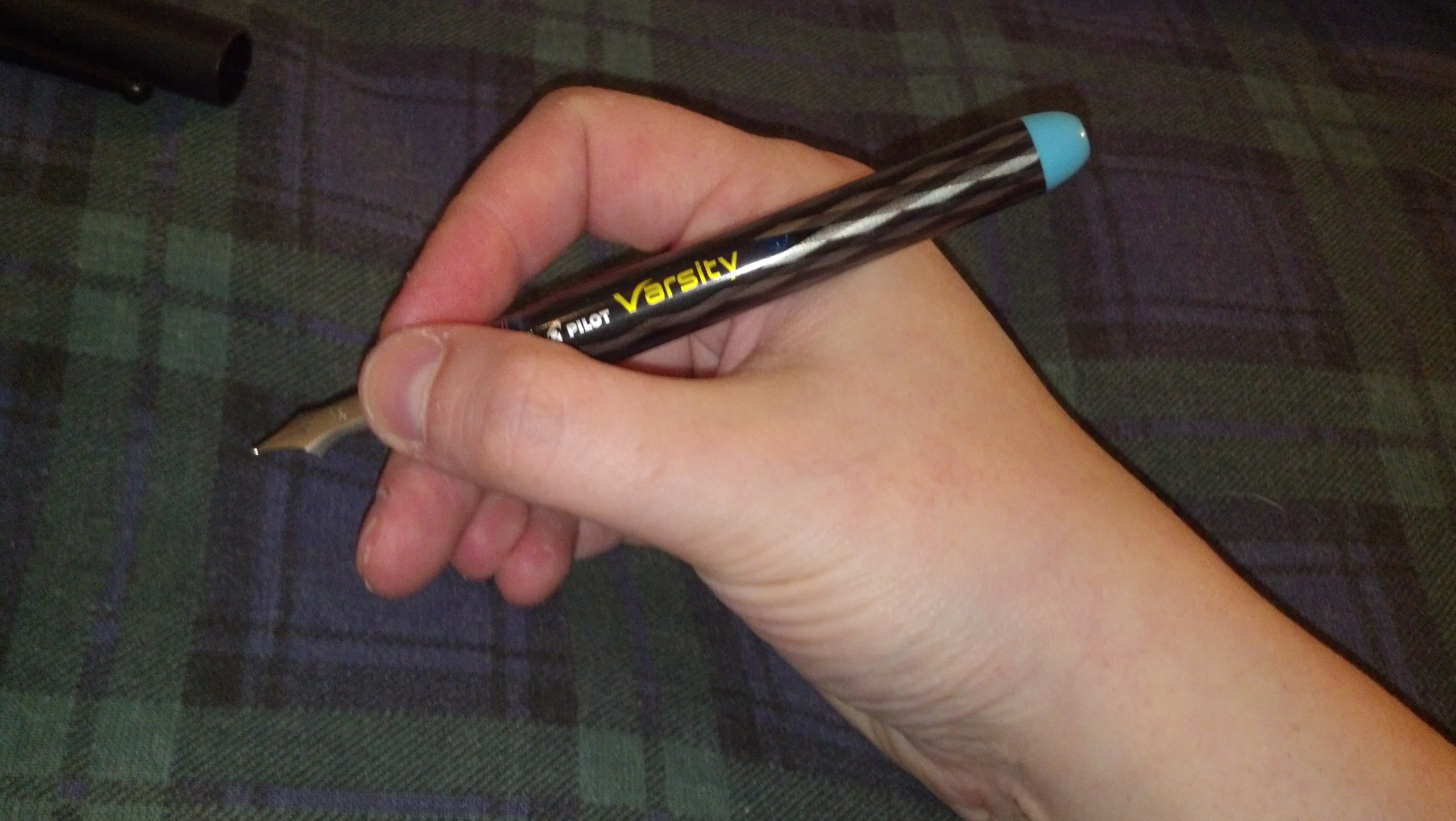
Pen without cap in hand

I’ve had two problems with these in the past. If they leak, it makes a big mess and if you forget about them in a drawer they tend to dry out (over like… months, not super quick). Neither are really huge problems, but I seem to have a bad habit of leaving these in drawers for some reason, so I tend not to buy them often. Also, they are not refillable. When they are empty or dry out, that’s all she wrote.

The Good

  • inexpensive
  • lightweight
  • comes in good colors of ink
  • smooth grip
  • pre-filled
  • reliable

The Bad

  • single-use
  • can dry out

Overall grade: A-

Super great starter fountain pen to see if you even like fountain pens. You can toss it in a bag and not worry about it. It’s not flashy, but it’s reliable and disposable.


Flash Fiction Final Four!

Jaym Gates invited me to a Flash Fiction Competition/Anthology to benefit the SFWA Medical Fund. Each week writers go head to head or at least Flash Fiction to Flash Fiction with the winner moving on to the next round. Last Week my Mars Flash Fiction moved me into this weeks round of Zen Vs. Glory

Please read.  (or listen! I did audio versions of both stories) Vote. And watch this space for the collected anthology to come. 

Self Study: Short Stories March 27-April 30

Rating System


  • * = has potential but has technical, cultural, or voice problems.
  • ** = Good story that didn’t quite live up to potential or could have used light revisions
  • *** = Good story, I see it as publishable quality even if it didn’t work for me.
  • **** = Great story, does some really neat things
  • ***** = I would nominate/vote for this story. Excellent quality, builds a full world, drags you into it for the full duration of the story and leaves fingernail marks on your soul.


80 Stories Read March 27 – April 30

One Star = 0

Two Stars = 10

Three Stars = 47

Four Stars = 17

Five Stars = 1


Year to Date: 142 Stories

One Star = 4

Two Stars = 22

Three Stars = 76

Four Stars = 48

Five Stars = 3